1 0 0 0 朝鮮史料及朝鮮活字圖書陳列目録
- 著者
- 京城帝國大學附屬圖書館 [編]
- 出版者
- [京城帝國大學附屬圖書館]
- 巻号頁・発行日
- 1932
1 0 0 0 開學七周年記念古圖書展觀目録
- 著者
- 京城帝國大學附属圖書館[編]
- 出版者
- 京城帝國大學附属圖書館
- 巻号頁・発行日
- 1931
1 0 0 0 朝鮮活字印刷資料展觀目録
- 著者
- 京城帝國大學附属圖書館[編]
- 出版者
- 京城帝國大學附属圖書館
- 巻号頁・発行日
- 1931
1 0 0 0 「ものいふ」の本義について : 資料としての古俳諧
- 著者
- 河村 瑛子
- 出版者
- 明治書院
- 雑誌
- 国語と国文学 (ISSN:03873110)
- 巻号頁・発行日
- vol.89, no.6, pp.39-52, 2012-06
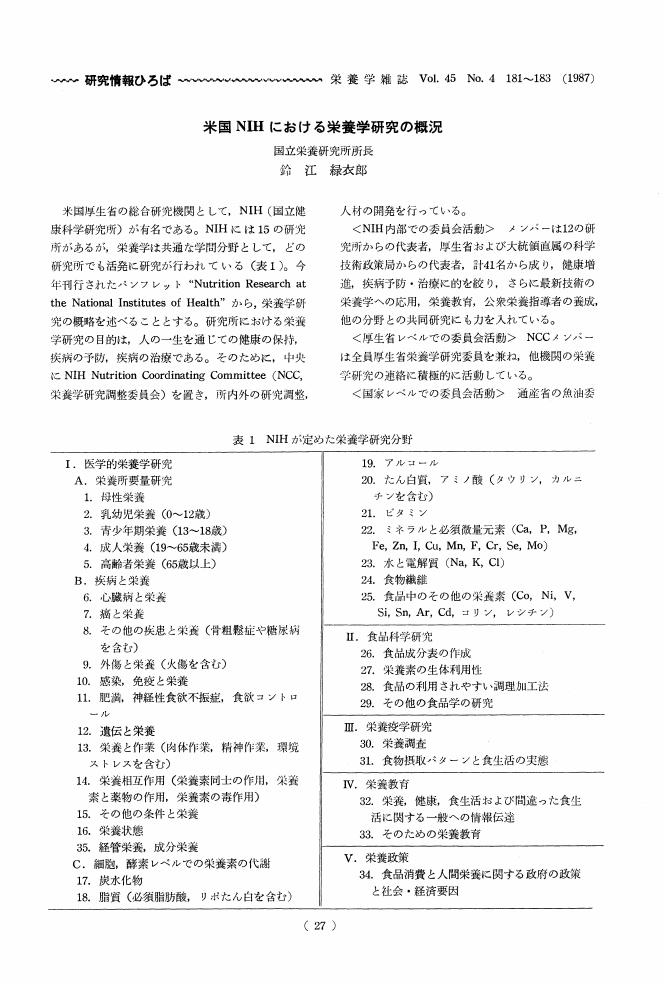
1 0 0 0 OA 米国NIHにおける栄養学研究の概況
- 著者
- 鈴江 緑衣郎
- 出版者
- 特定非営利活動法人 日本栄養改善学会
- 雑誌
- 栄養学雑誌 (ISSN:00215147)
- 巻号頁・発行日
- vol.45, no.4, pp.181-183, 1987-08-01 (Released:2010-04-30)
1 0 0 0 ケモフォビアをケモフィリアに!
- 著者
- 竹内 敬人
- 出版者
- 社団法人日本化学会
- 雑誌
- 化学と教育 (ISSN:03862151)
- 巻号頁・発行日
- vol.40, no.5, 1992-05-20
1 0 0 0 血液透析の心電図QTcに与える影響に関する基礎的検討 (第1報)
- 著者
- 中島 昭勝 東福 要平
- 出版者
- The Japanese Society for Dialysis Therapy
- 雑誌
- 日本透析医学会雑誌 (ISSN:13403451)
- 巻号頁・発行日
- vol.27, no.12, pp.1475-1481, 1994
血液透析患者において, 致死的不整脈をきたしうる心電図QTcの延長について検討した. 対象および方法: 対象は, 維持血液透析患者のうち, 3か月以上症状が安定している維持透析群32名 (男24名, 女8名) で, 血液透析前後で, 心電図QTc, 血液ガス分析, 血清電解質, 血中イオン化カルシウム (Ca<sup>++</sup>), 血中HANP, 体重, 血圧などを測定し, またこれらの患者と年齢, 男女比をマッチさせた正常対照群32名 (検診受診者) について心電図QTcを測定した. 結果: 透析前で維持透析群のQTcは, 0.439±0.025secと正常対照群の0.396±0.021secと比較し, 有意に延長していた (p<0.01). 維持透析群の中で0.438sec (正常対照群の平均値+2標準偏差) 以上のものが15名 (46.9%) であり, これをA群, 0.438sec未満のものをB群として, 両群を比較すると, 血清Caは, A群で8.8±1.0mg/d<i>l</i>, B群で9.8±1.2mg/d<i>l</i>と有意差が認められ (p<0.05), 他の血清電解質, 血中Ca<sup>++</sup>, 血液ガス分析, 血中HANPには, 両群間で有意差は認められなかった. QTcの透析前後の変化量 (<i>Δ</i>QTc) は, 血清Ca, 血中Ca<sup>++</sup>, HCO<sub>3</sub><sup>-</sup>の各変化量と相関したが, その他のデータとは相関しなかった. 透析後, A群において血清Caは平均9.6mg/d<i>l</i>まで上昇したが, QTcは平均0.450secと延長したままで, 短縮傾向は認められなかった. 結論: 慢性透析患者では, 透析前すでにQTcは延長を示す例が約半数を占め, 1回の血液透析で血清Caが正常化しても, QTcの延長の改善は認められなかった. そのQTcの延長については, 血清Ca以外に血液透析に伴う種々の原因による心筋自体の障害, 自律神経系の異常などについても検討する必要があると考えられた.
1 0 0 0 槇山榮次の教育学のこと
- 著者
- 山田 昇
- 出版者
- 奈良女子大学
- 雑誌
- 學習研究 (ISSN:09116117)
- 巻号頁・発行日
- vol.290, pp.65-69, 1984-08-15
1 0 0 0 IR V.E.フランクル『夜と霧』再訪 : "運命"の生き方
- 著者
- 秋本 倫子
- 出版者
- 東洋英和女学院大学
- 雑誌
- 人文・社会科学論集 (ISSN:09157794)
- 巻号頁・発行日
- no.30, pp.59-82, 2012
A worldwide best seller Yoru to Kiri (the original German title : EIN PSYCHOLOGE ERLEBT DAS KONZENTRATIONSLAGER, the Enlish title: Man's Search for Meaning) was written by a Jewish psychiatrist Viktor E. Frankl. It was first translated into Japanese by Tokuji Shimoyama, a clinical psychologist and a professor emeritus at Sophia University (an ex-professor of Toyo Eiwa University). Since its publication, it has been read by many people over generations. The book has tremendous power toinspire and to encourage. After he was released from the Nazi concentration camps, he continued to work as a psychiatrist, taught at universities, gave lectures around the world, and lived to be 92. He is a miraculous psychiatrist and a psychologist of a kind that cannot be found anywhere.The aim of this paper was to re-read Yoru to Kiri and examine both from the perspective of modern trauma psychology (1) what kind of psychological reactions, defense mechanisms or coping behaviors Frankl resorted to while he was imprisoned in the Nazi concentration camps, (2) how he overcame the trauma and adapted to his life after the war, and by referencing some literature on his life and on Holocaust survivors' psychology, (3) what kind of defense mechanisms or coping behaviors were effective in surviving extreme situations.Results:(1) It was found that Frankl showed at least some traumatic symptoms: extreme fear, denial or undoing, dissociation, repetitive and intrusive reactions (nightmares and obsession) , paralyzed or limited emotions, reduced interests, irritability and anger. The nightmares persisted till his ninties. (2) Frankl was not only using the coping behaviors as the Holocaust survivors in the literature, but he 82 was also rich in resources: intelligence, being a psychiatrist, warm and loving family elationships, and Jewish faith. More than anything, he supported himself by his firm convi ction that the life is worthwhile living no matter how harsh it may be.Conclusion: Frankl may have been a gifted person in many ways. But more than anything, he was willing, instead of giving in to the "fate", he was willing to take responsibility to find the right answers and fulfill the tasks given to him. He lived with this belief all his life and has been other people's lives meaningful.
1 0 0 0 OA 急成長するユニコーン企業の研究 〜eリサーチによるITサービス企業の分析〜
- 著者
- 相澤 宏行
- 巻号頁・発行日
- 2016-03
Supervisor:神田 陽治
- 著者
- 小山 晶子 武田 健 Seiko Oyama Ken Takeda
- 雑誌
- 産研論集 (ISSN:02881667)
- 巻号頁・発行日
- no.43, pp.17-27, 2016-03-23
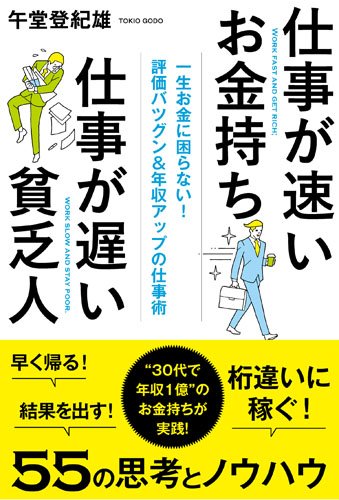
1 0 0 0 OA 特定食品成分の摂取によるTRP受容体を介した糖質エネルギー代謝調節機構の解明
1 0 0 0 「朝・日」混血として (暮らしを選びなおす(主題))
- 著者
- 李 定次
- 出版者
- 思想の科学社
- 雑誌
- 思想の科学 第6次 (ISSN:0389682X)
- 巻号頁・発行日
- no.32, pp.42-48, 1974-06
1 0 0 0 OA 関西大学ポピュラー音楽アーカイブの現状と課題
- 著者
- 杉本 舞 柴台 弘毅 三浦 文夫
- 雑誌
- 研究報告人文科学とコンピュータ(CH)
- 巻号頁・発行日
- vol.2014-CH-104, no.6, pp.1-5, 2014-10-11
本稿では,筆者らが現在構築を進めている日本のポピュラー音楽のデジタルアーカイブについて,その概要と課題について述べる.本アーカイブプロジェクトは,メディアや音楽関連団体などの協力を得て,日本のポピュラー音楽が独自的展開を見せ始める 1960 年代以降に焦点を当て,当時の音源に加え,ライブ記録や音楽クリップといった映像をデジタル化して保存するというものである.関連する雑誌や宣伝素材といった文書および画像,関係者へのインタビュー記録も対象とする.元の音源と映像の保存形態は時代に応じて多様であり,再生装置の確保が困難になりつつあるものもある.こういった資料をデジタル化するに当たっては,どのようなデータ形式を選ぶか,音質や画像の品質をどのように設定するべきか,さらに用途に応じて容易に検索可能とするためのメタデータ体系をどのように構築するかは慎重に検討せねばならない.また将来の活用を見据え,著作権・著作隣接権について解決すべき課題も多い.本稿では,このような諸課題に対する試みの現状を報告する.
1 0 0 0 ドイツ放射線防護令
- 著者
- 濱野 恵
- 出版者
- 国立国会図書館調査及び立法考査局
- 雑誌
- 外国の立法 : 立法情報・翻訳・解説 (ISSN:0433096X)
- 巻号頁・発行日
- no.266, pp.31-41, 2015-12
- 著者
- 野口 徳治
- 出版者
- 日本朝鮮研究所
- 雑誌
- 朝鮮研究 (ISSN:05779782)
- 巻号頁・発行日
- no.134, pp.17-21, 1974-03
1 0 0 0 OA Eenen 延年プロジェクト-伝統と創造力の間での狂言再生の試み(2009〜2015)-

- 著者
- 多木 陽介
- 出版者
- 桃山学院大学
- 雑誌
- 桃山学院大学総合研究所紀要 (ISSN:1346048X)
- 巻号頁・発行日
- vol.41, no.3, pp.23-45, 2016-03-15
Eenen, En-nen (延年) is a project that was started in 2006 by Tadashi Ogasawara, a Kyogen actor of the Izumi School, with the ambition to rediscover the primitive form of Kyogen and retrieve its original vigor. I have been involved in this project as stage director and researcher since 2009 together with Angelo Crotti, an Italian actor specializing in the role of Arlecchino in Commedia dell'Arte. For three years (April 2012 - March 2015) we were fortunate to receive academic and financial support from Osaka's Momoyama Gakuin University in the joint research program titled `The Establishment and Development of Masked Comedy in Japan and in Italy during the Medieval and Early Modern Period and its Contemporary Practice'. In this paper I examine what we have done and present an analysis of our experiments. Kyogen is a Japanese traditional comic theater which has undergone refinement and stylization throughout its long history. As a consequence, Kyogen today seeks only virtuosity in performance, leaving the social significance of the themes obscured or distorted, so that it is often difficult to understand the original meaning of the plots and the action. For example, in the famous and popular piece <<Ka-zumo>>(sumo with mosquito), the role of the mosquito should be interpreted as a metaphor for a poor hungry peasant, not an insect itself. Rereading <<Ka-zumo>>in this way, one will notice that this was bitter satire, not the fantasy-like comedy that we see today on the Kyogen stage. Originally, Kyogen was a form of satiric comedy with a real social function, but as a cost of the protection given by the ruling bushi class since the 17th century, it lost its vital link with society and was subjected to a kind of emasculation. Its stylization was nothing but the result of control by the authorities. It was also a general tendency in early modern Europe to `civilize' madness (the chaotic energy of comic plays, carnivalesque fetes, fools and so on). And this was very similar to what happened to Kyogen. Our objective is to deconstruct the stylized form of Kyogen and restore its original creativity and critical function in a contemporary society. For this purpose we took the approach of tracing back its genetic process in history. If we compare human activities as a whole to a big tree, each specialized field (not only technological or industrial fields, but also many traditional arts) corresponds to one branch at the top of ramification very highly posted, but very distant from its roots, and very poor and fragile in creativity, because we have so few lymphs at the branch end in quality and quantity. So it is necessary to step out of one's small branch end and descend to reach the parting point where many branches converge, and where you will find many more lymphs of creativity. Adopting Commedia dell'Arte, the Italian tradizional comic theater which has many similarities with Kyogen, but much less stylized as a "partner branch," we decided to go down to the parting point between Kyogen and Commedia dell'Arte. In the Eenen, En-nen project, we held conferences as well as workshops and experimental performances in collaboration with Commedia dell'Arte actors, namely Angelo Crotti and Andrea Brugnera, in Osaka, Venice and Bologna. For performances we chose some Kyogen texts and adapted them for present-day society by employing the improvisation technique of Commedia dell'Arte. We believe this is the only way to reach a larger bough where we could effectively rediscover the original energy and critical spirit of Kyogen. No less fruitful were the rehearsals themselves, through which we observed not a few essential points. At the beginning it was unexpectedly difficult for Ogasawara to act using improvisation. The reason? As Carola Baldini's MED method suggests, we can identify six different levels of human movement, which go from very personal identity to performing identity. Obviously, as a well-trained Kyogen actor, Ogasawara feels very much at ease at the Scenic Movement level, the most technical level mainly comprising our performing identity. But in acting using improvisation, which required much grater employment of his very personal psycho-physique zone, he had to contend with a less technical level of movement, from which he realized to be completely separated because of his traditional training. His body was heavily penetrated with kata, a stylistically codified form, a sort of performing language of Kyogen ,without which he fell into complete aphasia on the stage. Thus, we noticed in him a sharp split between personal identity and performing identity, life and form, mind and body, an interesting "symptom" typically observed in many traditional theater forms. Through a workshop held at Bologna University, we also realized that kata is not necessarily a fetter but a very effective and creative mode of expression. Kata is a complex language system, that is, a set of symbols to convey meanings. But sometimes in the course of history and the process of aesthetical refinement, the original meanings of kata become blurred or simply forgotten. Only by descending down to the genetic level we can understand the true meanings of kata, which need to be rediscovered every time we practice kata. The Eenen, En-nen project is a specific program to regenerate Kyogen, but all of our research, such as adaptations of Kyogen works, analysis of the symptom of the stage aphasia of Ogasawara or experiments utilizing kata, leads us to a fundamental question about the relationship between form and life. And we can apply the same method to other artistic subjects ; not only theater but also dance, music, painting, etc.