2 0 0 0 OA 「ディオニュソス的なもの」と「芸術の声への傾聴」
- 著者
- 西 章 Akira Nishi
- 雑誌
- 関西学院哲学研究年報 (ISSN:02892928)
- 巻号頁・発行日
- vol.38, pp.35-57, 2005-03-10
2 0 0 0 「私」の同一性と〈私〉の同一性
- 著者
- 永井 均
- 出版者
- 日本科学哲学会
- 雑誌
- 科学哲学 (ISSN:02893428)
- 巻号頁・発行日
- no.21, pp.43-55, 1988
2 0 0 0 「意識の超難問」の論理分析
- 著者
- 三浦 俊彦
- 出版者
- 日本科学哲学会
- 雑誌
- 科学哲学 (ISSN:02893428)
- 巻号頁・発行日
- vol.35, no.2, pp.69-81, 2002
The question "How can I be a?" ("a" being a proper name) has been recently referred to as "The Harder Problem of Consciousness", which would remain mysterious even after "The Hard Problem" about how subjective experiences arise is solved. Since both the indexical "I" and an exemplifying name "a" are ambiguous in their references, a formal analysis is required. Then, it turns out that any disambiguated version of "Harder Problem" is logically reduced to "The Hard Problem" or its special case "How can there be a?". There is no "Harder Problem" with its additional philosophical value. This is simply a matter of logic, independent of any ontology on whether metaphysical self exists or not.
2 0 0 0 OA 日本の薬学を哲学する
- 著者
- 奥田 潤
- 出版者
- 日本薬史学会
- 雑誌
- 薬史学雑誌 (ISSN:02852314)
- 巻号頁・発行日
- vol.55, no.1, pp.78-82, 2020 (Released:2020-08-02)
In this report, the author proposes the phrase, Philosophy of Pharmacy. In Japan, such a phrase has scarcely been used by pharmacists because they have considered medicines and drugs as materials and have not focused on their patients enough. As a way for pharmacists to consider their patients more, the author recommends the following two philosophies: 1. Revision of the Pharmacists Act Article 1: A pharmacist is to contribute to the improvement and promotion of public health by dispensing of medicine, and supplying medicines and other pharmaceutical health and sanitation services, thereby ensuring citizens lead healthy lives. The above, Article 1, needs to be revised by adding the following sentence. In addition, pharmacists should observe the new code of ethics for pharmacists introduced in 2018, and sympathize with patients to contribute to their medication. 2. Fully Consider Patients' Needs The author made a figure illustrating the relations between natural science(pharmacy),cultural science, social science and cultural art with care taken to fully consider the needs of the patient.
2 0 0 0 IR 岸本英夫のたたかい
- 著者
- 大町 公
- 出版者
- 奈良大学
- 雑誌
- 奈良大学紀要 (ISSN:03892204)
- 巻号頁・発行日
- no.21, pp.p13-23, 1993-03
筆者が岸本英夫の名を初めて知ったのは、池辺義教著『医の哲学』においてであったが、その書名にひかれ、文庫本『死を見つめる心』を買い求め、勤め帰りの電車の中であったように記憶するが、それを読み出した時の強い衝撃は今もって忘れられない。読み始めるや戦懐が走るのを覚えた。死について書かれたもので、これほどまでに赤裸々に述べられたものを他に知らないのである。初めて〈肉声〉を、〈生の声〉を聞いた思いがした。ここにはまぎれもなく、〈わが生死観〉がある。言うなれば手造りの生死観である。観念による粉飾がなく、まこと平易な文章で書かれている。そして、そこを冷静な情熱とでも言いうるものがしっかりと流れているのである。疲れた身であったように思うが、筆者の心はまもなくその文体に没入してゆき、夏も近満員電車の中で、一人異質で、冷たく孤独な時間が体の中を流れるのを感じていた。現在は、死が徐々にタブーでなくなりつつあり、死に関する書物が次々と出版されるようになった。タイトルに「死」という文字が入っていれば本が売れるというような時代がやってきたのである。これまでの時代の雰囲気への反発という面もあろう、死についての落ち着いた関心が芽生えるまでにはなおしばらく時間がかかりそうである。それらの中ではしばしば岸本の名前が挙げられ、その著書が引用されている。『死を見つめる心』はこの種の領域ではすでに特別な位置を占めている。早くも現代の古典といった地位にあるようにすら思えるのである。たとえば最近手にした精神科医中沢正夫著『「死」の育て方』のエピローグにおいても、中村真一郎編『死を考える』の感想という形で、ややくだけた言い方ながら次のような高い評価が与えられている。「…死についての成書―それも死一般を論じたものは、読むほどにいぶかしく見える。嘘っぼくみえてきて困った。…もちろん読めば必ず八〇パーセントの安心が得られる(二〇パーセントはしらじらしいと内なる天邪鬼がベロを出す)。それはキッパリと短い文で首尾一貫しているからである。…そのうえ、偉人・天才の言葉として語られるというシカケになっている。たとえば、前出の中村真一郎編の『死を考える』をみると、プラトン、マルクス・アウレリウス、モンテーニュ、リルケ、ネルヴァル、プルースト、孔子、ラーマクリシュナ、道元・・副堂々のラインアップである。どうだ、まいったかという感じである。…病める身で迫りくる自分の死をみつめている二つの文(漱石、岸本英夫)がこの本の最後に載っていなければ、私の天邪鬼は五十パーセントを超えてしまうだろう」しかし、なにゆえ岸本の『死を見つめる心』は高く評価されなければならないのか。「病める身で迫りくる自分の死をみつめ」つつ書かれたからか。それだけの理由からなのか。その他にどのような理由が考えられるのか。もう五年も前のことになるが、初めての出会いの衝撃を想い起しながら、その考えをたどってみることにしよう。
2 0 0 0 IR シス特権とトランス嫌悪言説の分析 : ジェンダー帰属の通時的固定性とジェンダー規範批判
- 著者
- 西條 玲奈 Saijo Reina サイジョウ レイナ
- 出版者
- 大阪大学大学院文学研究科哲学講座
- 雑誌
- メタフュシカ : the journal of philosophy and ethics (ISSN:13426508)
- 巻号頁・発行日
- no.51, pp.1-12, 2020-12
論文

- 著者
- 袴谷 憲昭
- 出版者
- 駒澤大学
- 雑誌
- 駒澤短期大學佛教論集 (ISSN:1342789X)
- 巻号頁・発行日
- vol.4, pp.163-181, 1998-10
2 0 0 0 OA ウェーバー思想における権力と人権 社会史的分析を中心として

- 著者
- 上山 安敏
- 出版者
- 日本法哲学会
- 雑誌
- 法哲学年報 (ISSN:03872890)
- 巻号頁・発行日
- vol.1976, pp.64-83, 1977-10-30 (Released:2008-11-17)
- 参考文献数
- 34
- 著者
- 松本 直樹
- 出版者
- 宗教哲学会
- 雑誌
- 宗教哲学研究 (ISSN:02897105)
- 巻号頁・発行日
- vol.34, pp.44-57, 2017-03-31 (Released:2017-06-01)
Obwohl schon immer viele Sprüche und Redewendungen unsere Sterblichkeit zum Thema hatten, hören wir ihre Worte meist nur „mit halbem Ohr“. Indem ich mich auf die „existenziale Analyse des Todes“ in Sein und Zeit, dem fruheren Hauptwerk Heideggers, beziehe, versuche ich in diesem Aufsatz, deutlich zu machen, was es heißt, dass wir die Worte eigentlich hören.In Sein und Zeit bezeichnet Heidegger den Tod als „die eigenste, unbezügliche, gewisse und als solche unbestimmte, unüberholbare Möglichkeit des Daseins“. Die Bestimmungen „gewiss“ und „unbestimmt“ schöpft er aus unserer alltäglichen Rede: „man stirbt am Ende auch einmal“. Die Gewissheit des Todes geht mit der Unbestimmtheit seines Wann einher. In der üblichen Vorstellung können wir aber diese zwei Bestimmungen nicht im strengen Sinne für wahr halten. Also stellt hier die „existenziale“ Todesanalyse einen Versuch dar, im Hinblick auf die drei übrigen, direkt aus der formalen Existenzidee hergeleiteten Bestimmungen die Gewissheit und Unbestimmtheit des Todes daseinsmäßig verständlich zu machen.Die bekannte Unterscheidung zwischen „Ableben“ und „Sterben“ steht in demselben Zusammenhang. Ableben ist etwas Wirkliches, ein umweltlich vorkommendes Ereignis, mit dem wir alltäglich vertraut sind, demgegenuber besagt Sterben das „Sein zum Tode“, die Seinsweise, in der wir uns zu der besagten ausgezeichneten Möglichkeit des Daseins verhalten. Die Unterscheidung liefert erst die Voraussetzungen, um die Bestimmungen „gewiss“ und „unbestimmt“ angemessen zu verstehen und auf die Rede vom Tod überhaupt ernsthaft horen zu konnen.Dabei ist zu beachten: Die Analyse korrigiert nicht die Rede vom Tod und ihre Worte selbst, sondern modifiziert nur den Horizont (das Seinsverstandnis), mit dem die Rede gehört wird. Dort hören wir keine anderen richtigen Worte als früher, sondern gleichsam nur dieselben Worte in anderem Ton. Dieses „dieselben Worte in anderem Ton“ macht den Kern der heideggerschen Todesanalyse aus. Und gerade dieser Kern macht die Analyse selbst zu einem vorbildlichen Verfahren, die Rede vom Tod eigentlich zu horen.
2 0 0 0 IR 素朴心理学的な心の捉え方を救う方策としての道具主義
- 著者
- 杉左近 淳
- 出版者
- 東京都立大学哲学会
- 雑誌
- 哲学誌 (ISSN:02895056)
- 巻号頁・発行日
- no.45, pp.34-53, 2003
2 0 0 0 OA へーゲル『法の哲学』における「人格」
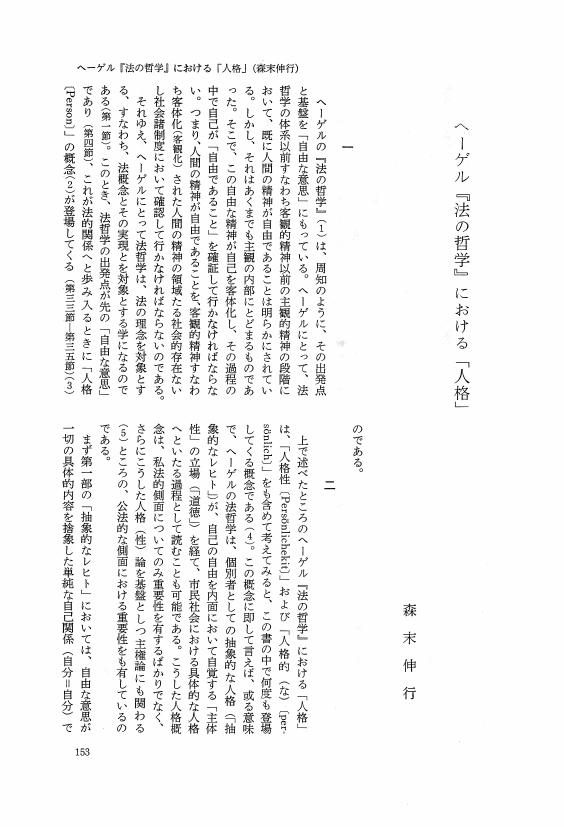
- 著者
- 森末 伸行
- 出版者
- 日本法哲学会
- 雑誌
- 法哲学年報 (ISSN:03872890)
- 巻号頁・発行日
- vol.1982, pp.153-159, 1983-10-10 (Released:2008-11-17)
- 参考文献数
- 28
- 著者
- 大橋 容一郎
- 出版者
- 上智大学
- 雑誌
- ソフィア : 西洋文化ならびに東西文化交流の研究 (ISSN:04896432)
- 巻号頁・発行日
- vol.58, no.4, pp.86-88, 2010-09-15
2 0 0 0 OA カルナップの哲学 「アウフバウ」を中心として

- 著者
- 市沢 哲
- 出版者
- 神戸大学大学院人文学研究科地域連携センター
- 雑誌
- Link : 地域・大学・文化 (ISSN:21856265)
- 巻号頁・発行日
- vol.7, pp.14-17, 2015-12
2 0 0 0 OA 全人的医療の歴史と展望
- 著者
- 永田 勝太郎
- 出版者
- 公益財団法人 国際全人医療研究所
- 雑誌
- 全人的医療 (ISSN:13417150)
- 巻号頁・発行日
- vol.17, no.1, pp.1-7, 2019-03-25 (Released:2019-05-09)
- 参考文献数
- 9
「心身医学は,全人的医療に展開しなくてならない」は,米国のシカゴ大学教授で,心身医学の先人フランツ・アレキサンダーや我が国の池見酉次郎(九州大学教授)に共通の展望である.全人的医療や患者中心医療は,耳あたりのよいことばであるがゆえ,多くの大学や病院がミッションとして掲げているが,実践している医療施設は少ない.我が国には,橋田邦彦が戦前から全機的医療を唱えたように,多くの蓄積がある.一方,総合診療医の育成が叫ばれている.総合診療医は,まず全人的医療が実践できなくてはならない.以下の要件が必須になる.教育・研究・実践のための大学院大学の設置が望まれる.1. パソジェネシス,サルトジェネシスの相互主体的鼎立2. 患者の生活者としての理解(intrapersonal communication)3. 誕生から死までの連続性の中での患者理解4. 機能的病態(機能性身体症候群:FSS)の積極的診断・治療5. 器質的病態の早期診断,専門医療への紹介,副作用低減のための補法の適応6. 致死的病態へのケア7. チーム医療のリーダーシップ8. 医師―患者関係の構築(interpersonal communication)9. 患者の行動変容のための患者教育10. 臨床研究11. 自己研鑽:健康哲学・医療哲学・死生学・医療倫理学
2 0 0 0 ブラッドリー的無限後退は事態の存在論にとって無害なのか
- 著者
- 秋葉 剛史
- 出版者
- 日本哲学会
- 雑誌
- 哲学 (ISSN:03873358)
- 巻号頁・発行日
- vol.2010, no.61, pp.149-164_L9, 2010
According to the widely accepted correspondence theory of truth, each atomic contingent truth has its own truth-maker, i.e., an entity existing in the world that makes contingent proposition true. And at least for the metaphysical realist, the first and obvious candidates for truth-maker are entities called “facts” or “states of affairs”. These are entities normally designated by expressions like “<i>a</i>'s being <i>F</i>” or “the fact that <i>a</i> is <i>F</i>”.<br>Although it seems natural to assume that states of affairs exist, there is a famous objection to this assumption, known as “Bradley's regress”. Roughly put, the objection proceeds as follows. The states of affairs are supposed to be complex entities. However, what accounts for the unity of constituents in the state of affairs, say, <i>Fa</i>? If one appeals to the exemplification relation <i>E</i> to bind the constituents <i>a</i> and <i>F</i> together, the explanatory job is not yet finished. For, in that case, the unity of <i>a</i>, <i>F</i>, and <i>E</i> now raises the same problem. It is no use to add further and further exemplification relations <i>E</i>', <i>E</i>'', <i>E</i>'''..., because each time one adds a new relation, one gets only a new explanatory task, and never the unity of <i>a</i> and <i>F</i>. Thus, since the unity of constituents cannot be accounted for, the assumption that states of affairs exist should be regarded as groundless.<br>Against this objection, F. Orilia replies as follows. Though the regress objection above seems to seriously threaten the assumption that states of affairs exist, in fact it does not. For, the thought that there is an infinite explanatory sequence does not involve any inconsistency. As for myself, I agree with him as far as his last claim is concerned, namely the claim that there is no inconsistency in the idea of infinite explanatory sequence. However, I disagree with him as far as the evaluation of the regress objection is concerned. I claim that the alleged explanatory sequence generated in the regress objection is in fact vacant in its explanatory power, and hence that this objection in any way shows the failure of explanatory task.
2 0 0 0 IR 翻訳 叙事詩の宗教哲学--Moksadharma-parvan和訳研究(28)
- 著者
- 茂木 秀淳
- 出版者
- 信州大学教育学部
- 雑誌
- 信州大学教育学部研究論集 (ISSN:18839339)
- 巻号頁・発行日
- no.3, pp.165-178, 2010-07
信州大学教育学部研究論集 3: 165-178(2010)
2 0 0 0 IR 翻訳 叙事詩の宗教哲学--Moksadharma-parvan和訳研究(27)
- 著者
- 茂木 秀淳
- 出版者
- 信州大学教育学部
- 雑誌
- 信州大学教育学部研究論集 (ISSN:18839339)
- 巻号頁・発行日
- no.1, pp.151-164, 2009-07
信州大学教育学部研究論集 1: 151-164(2009)
2 0 0 0 IR 人間の苦悩と人生の意味 -社会福祉哲学の根本問題-
- 著者
- 秋山 智久
- 出版者
- 昭和女子大学近代文化研究所
- 雑誌
- 學苑 = GAKUEN (ISSN:13480103)
- 巻号頁・発行日
- vol.844, pp.45-59, 2011-02-01