2 0 0 0 OA 西田における歴史的身体と身体を越えたもの 盤山宝積の剣をめぐって
- 著者
- 杉本 耕一
- 出版者
- 宗教哲学会
- 雑誌
- 宗教哲学研究 (ISSN:02897105)
- 巻号頁・発行日
- vol.33, pp.15-28, 2016-03-31 (Released:2017-03-10)
Later Nishida found a clue about how to analyze the structure of the human being that acts in the world of historical reality within the problem of the body. Nishida noticed that the human being possesses a body and makes things outside of himself by using it as a tool. This implies, on the one hand, that he has creative freedom, which other animals do not possess. However, on the other hand it is precisely because of this freedom that man cannot but come into conflict with the external world and suffer from the contradiction between the self and the world. Another of Nishida's remarkable ideas on the body is that the human being cannot be defined merely as a bodily being, but that it is connected to the dimension of that which transcends the body. In this essay the author attempts to clarify Nishida's unique idea on that which transcends the body and to examine how bodily action and the action of the body that transcends the body are related. This contemplation offers suggestions about how one is to understand Nishida's thoughts on religious practice. The author's considerations are based on Nishida's interpretation of the words of the Zen master Paochi of Panshan, which Nishida learned from D.T.Suzuki.
2 0 0 0 OA 言語論的転回への懐疑 論理実証主義を中心に

- 著者
- 亀本 洋
- 出版者
- 日本法哲学会
- 雑誌
- 法哲学年報 (ISSN:03872890)
- 巻号頁・発行日
- vol.1997, pp.34-56, 1998-10-30 (Released:2009-02-12)
- 参考文献数
- 60
2 0 0 0 OA 精神分析と哲学
- 著者
- 平井 邦夫 Kunio HIRAI
- 出版者
- 大手前女子大学
- 雑誌
- 大手前女子大学論集 = The Journal of Otemae Women's University (ISSN:02859785)
- 巻号頁・発行日
- vol.8, pp.10-24, 1974-11-06
2 0 0 0 OA 死後生殖に関して国内外の判例・事例における倫理問題の考察
- 著者
- 串 信考
- 出版者
- 日本医学哲学・倫理学会
- 雑誌
- 医学哲学 医学倫理 (ISSN:02896427)
- 巻号頁・発行日
- vol.24, pp.85-91, 2006-10-24 (Released:2018-02-01)
This research is intended to consider ethical problems posed by the legal precedents established in cases concerning posthumous reproduction in Japan, Britain, and America. In Matsuyama, Japan, a woman gave birth through artificial insemination using the frozen sperm of her deceased husband. The undisputed facts in this case are as follows: The biological father, who was undergoing treatment for leukemia, clinically donated a sample of semen in 1998 to be preserved for artificial insemination, since said treatment had the potential of rendering him sterile. After his death in 1999, his wife gave birth to a child in 2001. The child was conceived through in vitro fertilization embryo transfer using the husband's preserved semen. The Matsuyama District Court ruled in November 2003 against recognizing the legal relationship between the deceased father and the child born from posthumous reproduction. The wife appealed this ruling. In July 2004, the Takamatsu High Court subsequently ruled in favor of recognizing the legal relationship between the deceased father and his child. I examined six cases similar to the case in Matsuyama involving posthumous reproduction. There were four such cases in Japan, one in the United States, and one in Britain. In the case in Matsuyama, Japan, relatives of the deceased husband testified in court that the wife in question intended to bear child through posthumous reproduction. In one case in Japan, a wife seeking posthumous reproduction told her doctor that she wanted to artificially inseminate her husband's mother as well. This is did not involve the cases in Britain and the United States. In Japan, the family's consent is required for the organ transplants. I believe that there is a family characteristic peculiar to the Japanese with regard to posthumous reproduction.
2 0 0 0 OA 「認識の認識」?―一つの認識論擁護

- 著者
- シュネーデルバッハ ヘルベルト
- 出版者
- 日本ヘーゲル学会
- 雑誌
- ヘーゲル哲学研究 (ISSN:13423703)
- 巻号頁・発行日
- vol.1999, no.5, pp.2-23, 1999-12-16 (Released:2011-01-31)
- 参考文献数
- 41
2 0 0 0 OA ハイデガーと東アジアの対話
- 著者
- 嶺 秀樹
- 出版者
- 京都大学大学院文学研究科日本哲学史研究室
- 雑誌
- 日本哲学史研究 : 京都大学大学院文学研究科日本哲学史研究室紀要 (ISSN:24357103)
- 巻号頁・発行日
- vol.19, pp.33-59, 2023-03-15
2 0 0 0 OA 言語・規則・共同体 言語哲学の社会的=教育的インプリケーションを読み取る
- 著者
- 宮寺 晃夫
- 出版者
- 教育哲学会
- 雑誌
- 教育哲学研究 (ISSN:03873153)
- 巻号頁・発行日
- vol.2007, no.96, pp.1-21, 2007-11-10 (Released:2009-09-04)
- 参考文献数
- 29
何がわれわれを規則に従って進むように、あるものを規則とみなすように、強制するのか。何がわれわれを、すでに学んだ言語の形式において語り合うように強制するのか。ウイトゲンシュタイン『数学の基礎』中村秀吉・藤田晋吾訳、大修館、二四三頁。
- 著者
- 山﨑 雅広
- 出版者
- 日仏哲学会
- 雑誌
- フランス哲学・思想研究 (ISSN:13431773)
- 巻号頁・発行日
- vol.27, pp.215-226, 2022-09-01 (Released:2022-10-01)
2 0 0 0 OA 禅と西田哲学 : 脱自と表現
2 0 0 0 OA 西田哲学に於ける禅思想の特質
- 著者
- 井上 克人
- 出版者
- 東洋大学東洋学研究所国際禅研究プロジェクト
- 雑誌
- 国際禅研究 = INTERNATIONAL ZEN STUDIES (ISSN:24338192)
- 巻号頁・発行日
- vol.2, pp.1(84)-21(64), 2018-10
2 0 0 0 OA ルネッサンス期の万民法思想 ビトーリアの学説を対象として

- 著者
- 伊藤 不二男
- 出版者
- 日本法哲学会
- 雑誌
- 法哲学年報 (ISSN:03872890)
- 巻号頁・発行日
- vol.1962, pp.176-178, 1963-04-20 (Released:2009-02-12)
2 0 0 0 OA ガーイウス『法学提要』の法思想史的意義

- 著者
- 長谷川 史明
- 出版者
- 日本法哲学会
- 雑誌
- 法哲学年報 (ISSN:03872890)
- 巻号頁・発行日
- vol.1996, pp.129-136, 1997-10-30 (Released:2008-11-17)
- 参考文献数
- 21
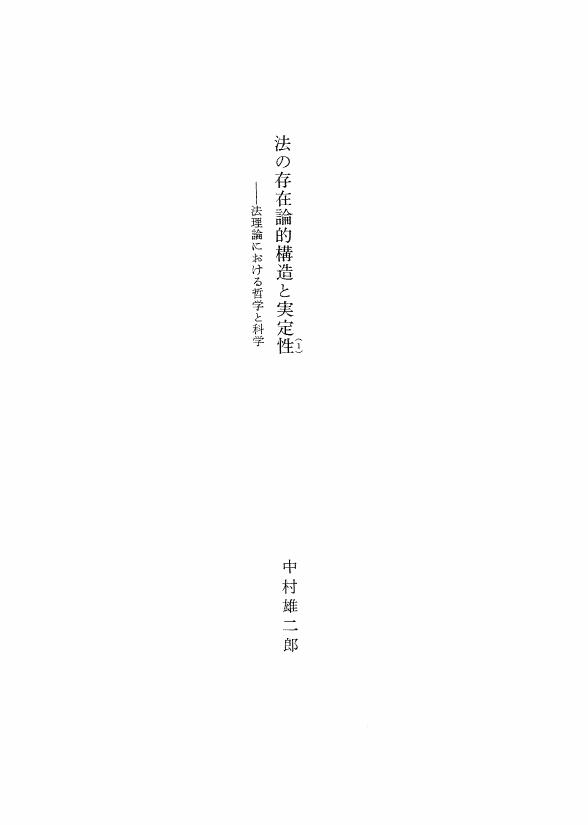
2 0 0 0 OA 法の存在論的構造と実定性 法理論における哲学と科学
- 著者
- 中村 雄二郎
- 出版者
- 日本法哲学会
- 雑誌
- 法哲学年報 (ISSN:03872890)
- 巻号頁・発行日
- vol.1973, pp.71-95, 1974-10-30 (Released:2009-02-12)
- 参考文献数
- 26
2 0 0 0 OA ガリレオ・デカルト・ホイヘンス
- 著者
- 伊藤 和行
- 出版者
- 日本科学哲学会
- 雑誌
- 科学哲学 (ISSN:02893428)
- 巻号頁・発行日
- vol.30, pp.15-28, 1997-11-10 (Released:2009-05-29)
Galileo and Descartes made an important contribution to the making of modern mechanics in the Scientific Revo-lution. However, there are crucial differences between their views on the nature of gravity and on the concept of iner-tial motion. They indicate the difference between their methods of science.Huygens supported Descartes' mechanical natural phi-losophy and based his theory of light on the corpuscular theory. But he criticized Decartes' excessive confidence in his own philosophy. Huygens gave higher priority to the solution of individual problems than to the construction of a whole system. He developed the problem-oriented method of Galileo's mathematical physics.
2 0 0 0 OA 蛇について : 神学的考察
- 著者
- 小林 謙一
- 出版者
- 横浜国立大学
- 雑誌
- 横浜国立大学人文紀要. 第一類, 哲学・社会科学 (ISSN:05135621)
- 巻号頁・発行日
- vol.38, pp.59-76, 1992-10-30
2 0 0 0 OA ユマニチュードの有効性と可能性
- 著者
- 竹林 洋一 本田 美和子 Yves Gineste
- 出版者
- 一般社団法人 人工知能学会
- 雑誌
- 人工知能学会全国大会論文集 第29回 (2015)
- 巻号頁・発行日
- pp.2M3NFC04a1, 2015 (Released:2018-07-30)
『ユマニチュード』は、「人と何か、ケアする人とは何か」という哲学をベースに開発された認知症ケア技法であり、「見る」「話す」「触れる」「立つ」「歩く」を基本とする具体的テクニックから構成されている。ユマニチュードは既存のケア技法との共通点も多いが、「人間尊重」を徹底して、マルチモーダルな介入(インタラクション)を行うことが特徴であり、心と脳に刺激を与え、認知症の人の心身の回復が促進することが実証されている。本報告では、MinskyとDamasioの感情・思考・身体に関わる研究の観点から、ユマニチュードの有効性と可能性について論じる。
2 0 0 0 OA レイモン・アロンの民主主義思想(2) : 全体主義批判と歴史哲学の交錯1930-40年
- 著者
- 池嵜 航一
- 出版者
- 北海道大学大学院法学研究科
- 雑誌
- 北大法学論集 (ISSN:03855953)
- 巻号頁・発行日
- vol.72, no.5, pp.241-280, 2022-01-31
- 著者
- 池嵜 航一
- 出版者
- 北海道大学大学院法学研究科
- 雑誌
- 北大法学論集 (ISSN:03855953)
- 巻号頁・発行日
- vol.73, no.3, pp.97-163, 2022-09-30
2 0 0 0 OA 『差異と反復』の解析と再構成の試み(1)
- 著者
- 財津 理
- 出版者
- 法政哲学会
- 雑誌
- 法政哲学 = Bulletin of Hosei Society for Philosophy (ISSN:13498088)
- 巻号頁・発行日
- vol.13, pp.25-35, 2017-03-20
Deleuze parle, 《l'histoire de la philosophie, c'est la reproduction de la philosophie même. Il faudrait que le compte rendu en histoire de la philosophie agisse comme un véritable double, et comporte la modification maxima propre au double》. Les mots que Deleuze cite de Hume, Bergson, Husserl, Kant, Nietzsche etc. dans le Chapitre Ⅱ de Différence et répétition, pourraient donc être doubles qui comporte la modification maxima, et pourtant notre essai cherche, enanalysant ces mots, à déterminer le statut de la matière et de l'esprit au sens deleuzien du terme.
2 0 0 0 OA 犯罪理論に対する心理学分野の貢献を考える
- 著者
- 藤野 京子
- 出版者
- 早稲田大学大学院文学研究科
- 雑誌
- 早稲田大学大学院文学研究科紀要. 第1分冊, 哲学 東洋哲学 心理学 社会学 教育学 (ISSN:13417517)
- 巻号頁・発行日
- vol.60, pp.5-19, 2015-02-26