3 0 0 0 IR 生活困窮者の地域居住の実現に向けた住まいの確保と居住の安定に関する研究

3 0 0 0 ある電子書店主の思い出話
- 著者
- 長谷川 秀記
- 出版者
- 国立研究開発法人 科学技術振興機構
- 雑誌
- 情報管理 (ISSN:00217298)
- 巻号頁・発行日
- vol.46, no.4, pp.266-268, 2003
3 0 0 0 IR 障害者労働をめぐる言説の分析
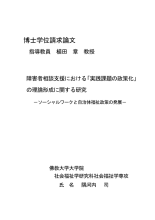
3 0 0 0 IR 障害基礎年金制度の成立プロセスを探る : 当事者運動と年金改革の接点
3 0 0 0 アスリートの身体:――ナチュラルとアンナチュラルのはざまで――
- 著者
- 竹村 瑞穂
- 出版者
- 現代文化人類学会
- 雑誌
- 文化人類学研究 (ISSN:1346132X)
- 巻号頁・発行日
- vol.21, pp.2-11, 2021
<p> 本稿では、競技スポーツ界が要求する競技者の身体の自然性にまなざしを向け、そこに浮かび上がる矛盾や問題性について指摘したい。</p><p> スポーツとは、じつに長い歴史をもつ人間の身体文化であるが、その過程で、科学技術の恩恵を受けながらさまざまな変貌を遂げてきた。トラック環境一つ取り上げてもその変化には驚かされるものがあり、科学技術による外的環境の改変が、スポーツ・パフォーマンスを向上させてきたことは事実である。このようなスポーツの高度化の過程において、外的環境の改変とともに注目に値するのは、スポーツをする人間の身体に向けられた改変への志向、すなわちドーピングの問題である。</p><p> ドーピング問題に対する倫理・哲学的研究の中では、ドーピングを禁止する直接的な根拠は見当たらないという議論も展開されてきた。ドーピング禁止理由の一つの論点に「身体の自然性」という視点があるが、しかし、この自然な身体こそが競技スポーツ界で排除の対象となる場合も生じている。先天的にテストステロンの値が高い女性アスリートの場合は、この身体の自然性こそが問題視され、ナチュラル・ドーピングとして人為的にその自然性を治療しなければ競技に参加できないような事態が生じているのである。</p><p> 競技スポーツ界において求められる身体の自然性とは、いったい、どのような自然性なのだろうか。生殖細胞や体細胞を操作する遺伝子改良は"自然"なのだろうか。先天的にテストステロン値が高い女性アスリートは先天的に"自然ではない"のだろうか。このような疑問を背景に、競技スポーツ界が求める身体性をめぐる揺らぎと、要求する"恣意的な"自然性の在りようを読み解くこととする。</p>
- 著者
- 井上 幸治
- 出版者
- 立命館大学
- 雑誌
- 立命館文學 (ISSN:02877015)
- 巻号頁・発行日
- no.624, pp.495-509, 2012-01
3 0 0 0 IR 居宅介護支援専門員が要介護高齢者の在宅生活を不可能と判断する要因についての研究
- 出版者
- 国際医療福祉大学
- 巻号頁・発行日
- 2015
元資料の権利情報 : CC BY-NC-ND
3 0 0 0 IR 家計からみる知的障害者家族の生活 : 障害・ケア・貧困の構造的把握に向けて

- 著者
- 福田 俊子
- 出版者
- 法政大学 (Hosei University)
- 巻号頁・発行日
- 2017
終了ページ : 177
- 著者
- 岸本 直文
- 出版者
- 国立歴史民俗博物館
- 雑誌
- 国立歴史民俗博物館研究報告 = Bulletin of the National Museum of Japanese History (ISSN:02867400)
- 巻号頁・発行日
- vol.185, pp.369-403, 2014-02
1990年代の三角縁神獣鏡研究の飛躍により,箸墓古墳の年代が3世紀中頃に特定され,〈魏志倭人伝〉に見られる倭国と,倭王権とが直結し,連続的発展として理解できるようになった。卑弥呼が倭国王であった3世紀前半には,瀬戸内で結ばれる地域で前方後円形の墳墓の共有と画文帯神獣鏡の分配が始まっており,これが〈魏志倭人伝〉の倭国とみなしうるからである。3世紀初頭と推定される倭国王の共立による倭王権の樹立こそが,弥生時代の地域圏を越える倭国の出発点であり時代の転換点である。古墳時代を「倭における国家形成の時代」として定義し,3世紀前半を早期として古墳時代に編入する。今日の課題は,倭国の主導勢力となる弥生後期のヤマト国の実態,倭国乱を経てヤマト国が倭国の盟主となる理由の解明にある。一方で,弥生後期の畿内における鉄器の寡少さと大型墳墓の未発達から,倭王権は畿内ヤマト国の延長にはなく,東部瀬戸内勢力により樹立されたとの見方もあり,倭国の形成主体に関する見解の隔たりが大きい。こうした弥生時代から古墳時代への転換についても,¹⁴C年代データは新たな枠組みを提示しつつある。箸墓古墳が3世紀中頃であることは¹⁴C年代により追認されるが,それ以前の庄内式の年代が2世紀にさかのぼることが重要である。これにより,纒向遺跡の形成は倭国形成以前にさかのぼり,ヤマト国の自律的な本拠建設とみなしうる。本稿では,上記のように古墳時代を定義するとともに,そこに至る弥生時代後期のヤマト国の形成過程,纒向遺跡の新たな理解,楯築墓と纒向石塚古墳の比較を含む前方後円墳の成立問題など,新たな年代観をもとづき,現時点における倭国成立に至る一定の見取り図を描く。The development of the study on sankakubuchi shinjukyo (triangular-rimmed mirrors decorated with gods and animals) in the 1990s dated the Hashihaka burial mound to around the middle of the third century. This research results revealed a direct connection between the Wa State described in Gishiwajinden (Account of the Wa in History of the Wei Dynasty written by Chinese) and the Wa Sovereignty and enabled to understand them as consecutive development. This is because it can be considered that the proliferation of keyhole-shaped burial mounds and gamontai shinjukyo (mirrors with an image band decorated with gods and animals) throughout the area around the Seto Inland Sea, which can be regarded as the movements of the Wa State described in Gishiwajinden, started when Himiko was queen of the Wa State in the first half of the third century. Therefore, the establishment of the Wa Sovereignty with several coexisting Wa kings can be dated to the beginning of the third century. This starting point of the Wa State, which exceeded the regional boundaries of the Yayoi period, marked a turning point of the age. Defined as "the period of nation building in Wa," the Kofun period can include the first half of the third century as its early stage.Remaining challenges are to get a clear picture of the Yamato State in the Late Yayoi period, as a leading force in the Wa State, and understand why the Yamato State became the leader of the Wa State after the domestic warfare. On the other hand, since there were exceedingly few iron implements and large-scale burial mounds, some researchers consider that the Wa Sovereignty did not follow as an extension of the Yamato State in the Kinai region but was established by an emerging force in the eastern Setouchi region. There are significant differences of opinion on who established the Wa State.With regard to the shift from the Yayoi period to the Kofun period, the carbon-14 dating method is suggesting a new framework. The method can reconfirm the date of the Hashihaka burial mound as around the middle of the third century. More importantly, the Shonai pottery is dated earlier to the second century. This means that the formation of the Makimuku site is also dated earlier to before the birth of the Wa State. Therefore, the site can be regarded as the independent establishment of the base of the Yamato State.Defining the Kofun period as described above, the present article is aimed at giving the latest picture of how the Wa State was established, based on the new view of dating. To this end, the article covers the establishment process of the Yamato State from the Late Yayoi period to the Kofun period and new perspectives on the Makimuku site, as well as examines the development of keyhole-shaped burial mounds including a comparison between the Tatetsuki mound tomb and Makimuku Ishizuka burial mound.
3 0 0 0 IR 「心中による虐待死」の子ども家庭福祉研究 : ファミリーソーシャルワークの必要性
- 著者
- 西岡 弥生 Yayoi NISHIOKA
- 出版者
- 聖隷クリストファー大学
- 巻号頁・発行日
- 2017
元資料の権利情報 : CC BY-NC-ND
3 0 0 0 IR 徳川家康の叙位任官
- 著者
- 藤井 讓治
- 出版者
- 史学研究会 (京都大学大学院文学研究科内)
- 雑誌
- 史林 = The Journal of history (ISSN:03869369)
- 巻号頁・発行日
- vol.101, no.4, pp.663-698, 2018-07
徳川家康の叙位任官については、家康が歴史上重要な人物であるだけに、一般書も含め多く取り上げられてきたが、基礎的事実を十分に検討しないまま、その歴史的意味が論じられている。この問題についての専論は少なく、またこうした研究においても見解が一致していないのが現状である。本稿では、事実関係が不確定な家康の左京大夫・中納言・大納言・左大将任官を中心に分析する。家康は、三河守初任に続いて左京大夫に任じられるが、左京大夫は朝廷関係以外では使用することなく左京大夫任官後も前官の三河守を使用した。朝廷官位使用の特異な事例である。任中納言の年月日は、従来天正十四年(一五八六)十月四日とされてきたが、事実は同年十一月五日であるとし、その意味を秀吉への臣従儀礼の中に位置づけた。また家康の源氏改姓が聚楽第行幸を機になされたとされてきたものを、それに先立つ天正十五年八月には源姓であったことを明らかにした。さらに天正十五年の任左大将は、正保二年(一六四五)の将軍家光の要請をうけて口宣案が改められた折に遡及して任じられたものであり、天正十五年時点での任官の事実はなく、この任左大将をめぐる論争はそもそも成立しないとした。The study of early-modern Japanese political history has witnessed great progress in recent years. This progress includes a deeper understanding of the ranks and offices awarded to samurai. However, in regard to the fundamental facts and dating of samurai appointments to ranks and offices, there are several theories even regarding such an important political figure during the period as Tokugawa Ieyasu, and there are many misunderstandings. In order to create a political history of this age, confirming the facts and dating of Ieyasu's posts and ranks is a pressing issue. In this article I confirm the facts and dates of Ieyasu's ranks and offices, ascertain under what political circumstances they were granted, and furthermore determine their significance. To the extent that Ieyasu was an important political figure. Ieyasu's appointments to ranks and offices are dealt with in general works of history, but fundamental studies have not been sufficiently conducted, and there is no scholarly consensus regarding them. Ieyasu was first appointed governor of Mikawa province, then Sakyō Daibu (Commissioner of the Left Division of the Capital), Jijū (Chamberlain), Ushōshō (Junior Captain of the Palace Guards of the Right), Sachûjō (Middle Captain), Sangi (Consultant), Chûnagon (Middle Counselor), Dainagon (Major Counselor), Naidaijin (Minister of the Center), Udaijin (Minister of the Right), Seiitaishōgun (Babarian-subduing General), and finally Daijōdaijin (Chancellor). This article chiefly analyzes his appointment to the posts of Sakyō Daibu, Chūnagon, Dainagon, and Sadaishō, for which there has no confirmation in the historical record. Ieyasu was appointed Sakyō Daibu shortly after being named governor of Mikawa. In general, when someone was appointed to a new office, thr person would then be known by his new official title, but Ieyasu did not employ the Sakyō Daibu title except in relationship to the imperial court, and even after being appointed Sakyō Daibu continued to use his previous title, governor of Mikawa. This is an example of a unique use of an imperial title. The date of Ieyasu's appointment to the post of Chūnagon has been seen as having been on the fourth day of the tenth month of Tenshō 14 (1586) on the basis of a draft decree in the Nikkō Tōshōgû monjo found in Kugyō bunin, but I have confirmed that the actual date was the fifth day of the eleventh month of the same year and locate its significance within the course of the ceremonial relationship of lord and vassal with Hideyoshi. Furthermore, Ieyasu's adoption of Minamoto clan affiliation is seen within the context of the imperial progress to the Jurakutei, but I make clear that he had used the Minamoto clan name previously during the eighth month of Tenshō 15, and I present new evidence for consideration of this name change. The Ieyasu's appointment to Sadaishō (General of the Left) in Tenshō 15 can only be traced back to the occasion of request by the third Tokugawa shogun, Iemitsu, for reissuance of an oral decree in Shōho 2 (1645), and I clarify that the supposed appointment in Tenshō 15 is not historically accurate. Kasaya Kazuhiko's proposal of the existence of a Tokugawa Shogunate under a Toyotomi regency that is premised on the Ieyasu's appointment as Saidaishō and the arguments surrounding it are thus unsustainable.
3 0 0 0 好きなことと突き詰めること
- 著者
- さかなクン
- 出版者
- 日立みらい財団
- 雑誌
- 犯罪と非行 (ISSN:03856518)
- 巻号頁・発行日
- no.176, pp.5-9, 2013-09
3 0 0 0 OA イタリアに於けるギリシア學

- 著者
- 野上 素一
- 出版者
- 日本西洋古典学会
- 雑誌
- 西洋古典學研究 (ISSN:04479114)
- 巻号頁・発行日
- vol.3, pp.104-111, 1955-05-10
- 著者
- 岡 檀
- 出版者
- 明治安田こころの健康財団
- 雑誌
- 研究助成論文集 (ISSN:09106553)
- 巻号頁・発行日
- no.48, pp.156-160, 2012
3 0 0 0 OA 保育所長の職員採用に係る意識に関する研究

- 著者
- 石川 昭義 西村 重稀 矢藤 誠慈郎 森 俊之 青井 夕貴
- 出版者
- 仁愛大学
- 雑誌
- 仁愛大学研究紀要. 人間生活学部篇 (ISSN:21853363)
- 巻号頁・発行日
- vol.4, pp.30-38, 2013-03-31
平成23 年8 月に,A市(政令指令都市)の保育所289 園とB県の保育所278 園の所長を対象に調査を依頼した(保育所長の保育所運営に係る意識に関する調査).本稿では,調査質問項目の中から,四大卒及び男性保育士の採用に係る調査結果と併せて,新たに実施したヒアリング調査の結果を報告する.保育所長は,四大卒保育士の採用については,「どちらともいえない」という回答が最も多く(56.1%),ついで「ややそう思う」(24.1%)という回答が多かった.四大卒の保育士に期待する領域としては,「子どもの発達過程の理解」,「ソーシャルワークの知識・技能」,「保護者からの相談対応」が高かった.今後の男性保育士の採用については,「どちらともいえない」(38.4%),「ややそう思う」(30.0%)という回答が多かった.男性保育士の採用をめぐる自由記述では,採用に積極的な意見から消極的な意見まで,多様な見解があることが判明した.同時に,保育士の給与のベースとなる運営費の在り方という課題も浮かび上がった.
3 0 0 0 IR 精神保健福祉士の「寄り添い」に関する縦断研究
- 著者
- 山田 妙韶
- 出版者
- 日本福祉大学社会福祉学部
- 雑誌
- 日本福祉大学社会福祉論集 = Journal social Welfare, Nihon Fukushi University (ISSN:1345174X)
- 巻号頁・発行日
- no.143, pp.13-26, 2021-03-31
精神保健福祉士(以下,要旨で PSW)に「寄り添う支援」についてのインタビュー調査を行い,1 年目と 3 年目の比較(縦断研究)をすることで,経験年数による共通性や差異を見ることを目的とした.PSW の資格修得後,実務経験 1 年目と 3 年目の調査に協力いただける PSW 6 名にフォーカス・グループ・インタビューを行った.質的統合法で分析を行った.その結果,以下の点が分かった.① 1 年目で語られていた話題が3 年目では語られていない.②同じ表題名でありながらとらえ方が変わった.③ 1 年目で定義づけされた「PSW の寄り添う支援」が 3 年目では定義するに至らなかった.④1 年目の調査では語られなかった「伴走」について 3 年目にその実践が語られた.以下4 点を今後の課題とする.①「寄り添う支援」を PSW の業務の文脈で考察する.②熟練 PSW へのインタビュー調査を行い実務経験の年数の点から考察する.③「寄り添い/寄り添う」と「伴走」との異同について考察することである.④インタビュアーの向上.