1 0 0 0 OA 「国語科」のライフストーリー

- 著者
- 松本 修 市川 泰子
- 出版者
- 全国大学国語教育学会
- 雑誌
- 全国大学国語教育学会発表要旨集
- 巻号頁・発行日
- vol.112, pp.43-46, 2007-05-26
1 0 0 0 女の香炉・大倭宮廷の剏業期
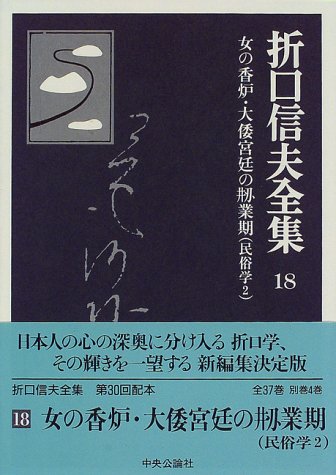
- 著者
- 折口信夫 [著] 折口信夫全集刊行会編纂
- 出版者
- 中央公論社
- 巻号頁・発行日
- 1997
1 0 0 0 IR オ-ストリア学派の社会的基盤
- 著者
- 八木 紀一郎
- 出版者
- 岡山大学経済学会
- 雑誌
- 岡山大学経済学会雑誌 (ISSN:03863069)
- 巻号頁・発行日
- vol.17, no.3, pp.p653-669, 1986-02
- 著者
- 土志田 佳枝
- 出版者
- 名古屋大学
- 雑誌
- 名古屋大學法政論集 (ISSN:04395905)
- 巻号頁・発行日
- vol.241, pp.55-105, 2011-09-24
1 0 0 0 IR アンシャン・レジームにおけるプロテスタントの婚姻(一) : フランス婚姻法の法制史的研究
- 著者
- 土志田 佳枝
- 出版者
- 名古屋大学
- 雑誌
- 名古屋大學法政論集 (ISSN:04395905)
- 巻号頁・発行日
- vol.240, pp.101-157, 2011-06-25
1 0 0 0 OA ヘーゲルとキリスト教

- 著者
- 野田 又夫
- 出版者
- 京都大学
- 雑誌
- 京都大學文學部研究紀要 (ISSN:04529774)
- 巻号頁・発行日
- vol.4, pp.105-140, 1956-11-20
この論文は国立情報学研究所の学術雑誌公開支援事業により電子化されました。In his tutorial period Hegel was occupied with a personal interpretation of Christianity, or more exactly, of the "religion of Jesus" in contradistinction to the "Christian religion." He presents Jesus as a "belle ame" teaching a pantheistic philosophy of life. But the question arises whether or not Jesus' destiny itself can be interpreted in terms of the same philosophy. Rejecting the common Christian solution, Hegel would rather regard Jesus as hero in a tragedy, but difficulties come up which lead him to reflect anew on politics. During his professorship at Jena he conceives first an ideal ethical state (Sittlichkeitsstaat) which is totalitarian and absorbs religion into politics. But later he admits more of the liberty of individuals into his state ( Moralitatsstaat), where the Christian religion comes to be allowed a spiritual authority. It seems that he then had a strong personal motive to go beyond politics and seek truth in religion. Over against the French revolution and its fruits being reaped by Napoleon, politics becomes for Hegel no more than politics. The model of reality he transfers from the political society to a community of "belles ames," where no legal and moral laws supervise, but all members are reconciled with each other by mutual confession and remission of sins. This idea of religious community serves Hegel as criterion and ideal of the truth of religion. And its nearest approximation he finds in Christian communion. Hence the characteristic features of Christianity as Hegel conceives it. The God transcendent is no true God. The redemption by Christ is only metaphorically true. Also the famous dictum that philosophy changes into "concept" what religion conceives in the form of "imagination" means that philosophy emancipates members of the Christian communion from transcendental faith and eschatolological hope so that they may attain here and now perfect reconciliation with God the Spirit.
1 0 0 0 OA 『晉書』王戎伝(巻四十三)訳注(日本文学科)

- 著者
- 鷹橋 明久
- 出版者
- 尾道大学
- 雑誌
- 尾道大学芸術文化学部紀要 (ISSN:13471910)
- 巻号頁・発行日
- vol.7, pp.A55-A65, 2007
日本文学科
1 0 0 0 OA 情報社会におけるロケーションツーリズムの可能性 : 映画の撮影地関連情報に関する一考察
- 著者
- 木村 めぐみ
- 出版者
- 北海道大学観光学高等研究センター = Center for Advanced Tourism Studies, Hokkaido University
- 雑誌
- CATS 叢書 (ISSN:21853150)
- 巻号頁・発行日
- vol.7, pp.189-207, 2012-03-31
観光資源としてのコンテンツを考える : 情報社会における旅行行動の諸相から = Current Issues in Contents Tourism : Aspects of Tourism in an Information-Based Society
1 0 0 0 OA 聖地巡礼を創造するデジタルコンテンツの発展可能性
- 著者
- 増本 貴士
- 出版者
- 北海道大学観光学高等研究センター = Center for Advanced Tourism Studies, Hokkaido University
- 雑誌
- CATS 叢書 (ISSN:21853150)
- 巻号頁・発行日
- vol.7, pp.177-188, 2012-03-31
観光資源としてのコンテンツを考える : 情報社会における旅行行動の諸相から = Current Issues in Contents Tourism : Aspects of Tourism in an Information-Based Society
1 0 0 0 OA 青年期自己形成概念としての<修養>論の誕生

- 著者
- 和崎 光太郎
- 出版者
- 教育史学会
- 雑誌
- 日本の教育史学 : 教育史学会紀要 (ISSN:03868982)
- 巻号頁・発行日
- vol.50, pp.32-44, 2007-10-01
This paper clearly specifies when Shuyo theory first originated and how it was conceptualized at that time. Tsutsui Kiyotada attempted to explain the typical characteristics of Shuyo in the second half of the Meiji Era, but in trying to define the actual condition of Shuyo, he was unable to fully explain how the concept applied in various social functions in Japanese society. I think there are pitfalls in attempting a functional analysis when the conceptual regulation of Shuyo itself is not adequately defined. In the first section of this paper, problems with the origin of the term Shuyo and this theory in modern Japan are examined, showing that the term and concept originated in the early 1890s. In the second section, the meaning of the concept at the time of its origin in the late 19th century is examined. Shuyo was regarded as a substitute for formal moral education methods of the time, such as reading the Imperial Rescript on Education. In the third section, I extend the discussion of the Shuyo theory to the period following the Sino-Japanese War, when, as it was described by critics, it was used as a method for molding the behavior of "youth" in order to create "people" of the future.
1 0 0 0 OA 「アニメ聖地」における趣味の表出 : 「趣都」と「アニメ聖地」の比較から
- 著者
- 谷村 要
- 出版者
- 北海道大学観光学高等研究センター = Center for Advanced Tourism Studies, Hokkaido University
- 雑誌
- CATS 叢書 (ISSN:21853150)
- 巻号頁・発行日
- vol.7, pp.105-120, 2012-03-31
観光資源としてのコンテンツを考える : 情報社会における旅行行動の諸相から = Current Issues in Contents Tourism : Aspects of Tourism in an Information-Based Society
1 0 0 0 OA コンテンツツーリズムをめぐる社会の動向と関連研究の今後の可能性
- 著者
- 山村 高淑
- 出版者
- 北海道大学観光学高等研究センター = Center for Advanced Tourism Studies, Hokkaido University
- 雑誌
- CATS 叢書 (ISSN:21853150)
- 巻号頁・発行日
- vol.7, pp.1-10, 2012-03-31
観光資源としてのコンテンツを考える : 情報社会における旅行行動の諸相から = Current Issues in Contents Tourism : Aspects of Tourism in an Information-Based Society
1 0 0 0 OA 巻頭言: コンテンツツーリズム論の構築を目指して
- 著者
- 山村 高淑
- 出版者
- 北海道大学観光学高等研究センター = Center for Advanced Tourism Studies, Hokkaido University
- 雑誌
- CATS 叢書 (ISSN:21853150)
- 巻号頁・発行日
- vol.7, pp.i-ii, 2012-03-31
観光資源としてのコンテンツを考える : 情報社会における旅行行動の諸相から = Current Issues in Contents Tourism : Aspects of Tourism in an Information-Based Society
1 0 0 0 OA 滿漢合璧雍正朝奏摺譯注
- 著者
- 河内 良弘
- 出版者
- 京都大學文學部
- 雑誌
- 京都大學文學部研究紀要 (ISSN:04529774)
- 巻号頁・発行日
- vol.31, pp.51-176, 1992-03-31
この論文は国立情報学研究所の学術雑誌公開支援事業により電子化されました。
1 0 0 0 OA 一心一徳考--清朝における政治的正當性の論理
- 著者
- 谷井 俊仁
- 出版者
- 東洋史研究会
- 雑誌
- 東洋史研究 (ISSN:03869059)
- 巻号頁・発行日
- vol.63, no.4, pp.682-718, 2005-03
1 0 0 0 OA ヴァジニア・ウルフ「ひとつのまとめ」 : 『幽霊屋敷』から

- 著者
- 坂本 正雄
- 出版者
- 和歌山大学
- 雑誌
- 和歌山大学教育学部紀要. 人文科学 (ISSN:1342582X)
- 巻号頁・発行日
- vol.55, pp.73-74, 2005-02-28
1 0 0 0 量子空間と Riemann 予想
- 著者
- 黒川 信重
- 出版者
- 一般社団法人日本物理学会
- 雑誌
- 日本物理學會誌 (ISSN:00290181)
- 巻号頁・発行日
- vol.53, no.9, pp.696-699, 1998-09-05
数学における基本的で重要な関数はRiemannゼータ関数である. Riemann予想はRiemannゼータ関数の本質的零点の実部がすべて1/2であるという, 1859年に提出された予想であり, 現代数学の最大の難問と言われている. Riemann予想を解こうとするさまざまな試みから, ゼータ関数論をはじめとする数学のたくさんの分野が成長してきた. 懸案だったFermat予想が最近350年ぶりに解かれたのもゼータ関数論の一応用である. 物理学とRiemannゼータ関数との関連は, 場の量子論, 超弦理論, Casimir効果, カオスなど多様な面から深く考察されてきた. 長年にわたる研究の結果, Riemann予想解決の鍵は量子空間にありそうなことがわかりつつある. これは現状の概観である.
1 0 0 0 OA 小銃彈を以てする防楯用鋼の抵抗測定

- 著者
- 本多 光太郎 竹前 源藏 渡邊 直行
- 出版者
- 社団法人日本鉄鋼協会
- 雑誌
- 鐵と鋼 : 日本鐡鋼協會々誌 (ISSN:00211575)
- 巻号頁・発行日
- vol.17, no.10, pp.1047-1057, 1931-10-25
The purpose of the present investigation was to measure quantitatively the efficiency of a shield plate in resisting penetration by a rifle bullet. A simple, mechanical, and accurate method for determining the velocity of the bullet was devised, by which the velocity of the bullet after passing through test plates of different thickness was measured. By this means the residual velocity vers. plate thickness curve for different metals was obtained. This curve which is called the "characteristic curve" of the shielding efficiency of a metal was obtained for different metals and alloys. The curve not only dives the residual velocity of a bullet after passing throgh a shield plate of a given thickness, but also the thickness of the metal plate which is just sufficient to stop the impinging bullet, on the "penetration distance". The best material found as the result of the present investigation is a special steel, the penetration distance of which is 4.5mm. for a bullet 9 grams in mass and a velocity 790 meters per second. The penetration distance of laminated plates, and of two plates of equal thickness separated from each other by a distance was also measured. The same quantity for wood, sand and glass, of different kinds was also measured.