2 0 0 0 OA 長野県西部地域における二重スペクトル比によるS波減衰の推定
- 著者
- 松澤 孝紀 武尾 実 井出 哲 飯尾 能久 伊藤 久男 今西 和俊 堀内 茂木
- 出版者
- 公益社団法人 日本地震学会
- 雑誌
- 地震 第2輯 (ISSN:00371114)
- 巻号頁・発行日
- vol.56, no.1, pp.75-88, 2003-06-02 (Released:2010-03-11)
- 参考文献数
- 21
- 被引用文献数
- 3
We estimated S-wave attenuation (QS-1) in a wide frequency range between 4Hz and 60Hz using the twofold spectral ratio [Matsuzawa et al. (1989)] in the western Nagano region, Japan, where the 1984 Naganoken-Seibu earthquake (M6.8) occurred and the seismicity is still active. In the region, there are 49 seismic stations in a range of around 10km in diameter and station separation is several kilometers. In this analysis, 156 shallow (depth <10km) events (0.9≤MW≤2.6) are used. We can effectively reduce the errors of the estimation by using a number of ray paths. We also determined the focal mechanisms of these events and corrected the waveform amplitudes using them. The direct S-wave portions of the seismograms are relatively small in a high frequency range (above 60Hz) at surface stations compared to the lower frequency waves, and contaminated by P-coda waves. Thus, to estimate QS-1 value, we used only the waves whose S/N ratios are greater than 2, where the noise levels are calculated for the time windows just before S-wave arrivals. Obtained QS-1 values show strong frequency dependence below 10Hz, but weak above 10Hz. These values are slightly larger than the ones estimated by Yoshimoto et al. (1998) from the coda-normalization method. This difference is probably owing to the fracture area of the 1984 Naganoken-Seibu earthquake that has strong attenuation.
2 0 0 0 OA 建築家マックス・ヒンデルの経歴と作品について
- 著者
- 角 幸博
- 出版者
- 日本建築学会
- 雑誌
- 日本建築学会計画系論文集 (ISSN:13404210)
- 巻号頁・発行日
- vol.59, no.465, pp.175-181, 1994-11-30 (Released:2017-01-27)
- 被引用文献数
- 3 3
Max Hinder (1887-1963), a Swiss architect, was born in Zurich on 20th of January, 1887. In 1924, after pursuing his career as an architect in Switzerland, Germany, Austria etc., he came to Japan. He resided in Sapporo for three and half years till 1927, where he worked on numerous houses including his own, two mountain huts, two missionary schools-the Fuji (1924) and the Hokusei (1929), the St. Franciscan monastery(1925), a cathedral in Niigata (1927) and other buildings, besides proposed a project for the architectural competition for the erection of a LEAGUE OF NATIONS BUILDING AT GENEVA in 1926. He moved to Yokohama in 1927 and continued his work untill the year of 1940, when he went to Germany. During these thirteen years, he designed the Jochi University (1931) and the St. Mary Hospital (1931) at Tokyo, a cathedral in Utsunomiya (1932) and others. He closed his earthly pilgrimage in Regen, a small town of Germany, in 1963.
2 0 0 0 OA 法情報リサーチの習得術(<特集>インフォプロの自己研鑽)

- 著者
- 藤井 康子
- 出版者
- 一般社団法人 情報科学技術協会
- 雑誌
- 情報の科学と技術 (ISSN:09133801)
- 巻号頁・発行日
- vol.63, no.4, pp.145-148, 2013-04-01 (Released:2017-04-18)
- 参考文献数
- 13
2 0 0 0 OA 山陰東部,神鍋火山群及び近傍の玄武岩質単成火山のK-Ar年代
- 著者
- 古山 勝彦 長尾 敬介 笠谷 一弘 三井 誠一郎
- 出版者
- 地学団体研究会
- 雑誌
- 地球科学 (ISSN:03666611)
- 巻号頁・発行日
- vol.47, no.5, pp.377-390, 1993-09-25 (Released:2017-06-06)
- 被引用文献数
- 4
K-Ar ages of 21 Quaternary basaltic rocks from the Kannabe Volcano Group and adjacent monogenetic volcanoes in the east San-in district were determined. In the Kannabe Volcano Group, the oldest ages, 0.7Ma, were gotten from the Nishiki Volcano. There was a long rest (about 0.5 Ma) of the volcanic activity after the eruption of the Nishiki Volcano. After that, from 0.22 Ma to recent, 6 volcanoes, if including adjacent volcanoes, 9 volcanoes, erupted intermittently. The east San-in district is the most active district of the basaltic volcanism in the San-in and Chugoku area, southwest Japan, in the present day.
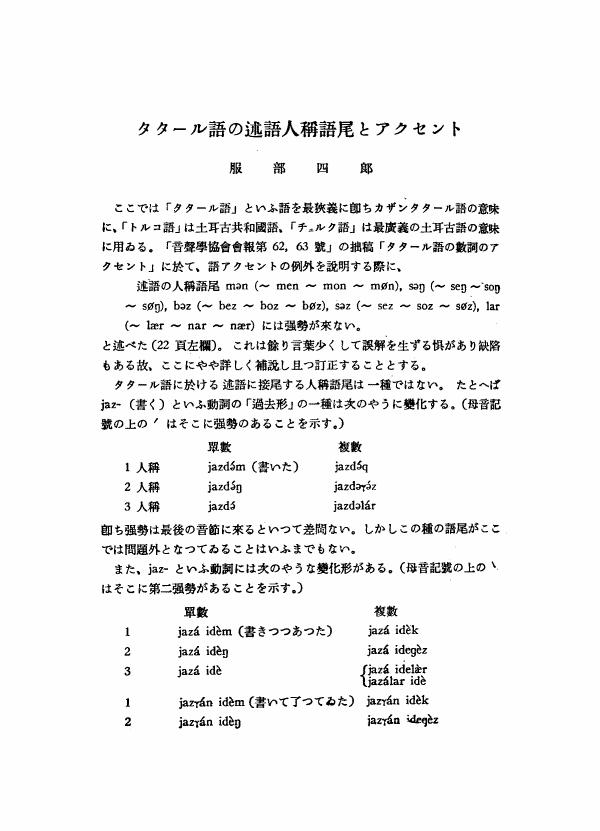
2 0 0 0 OA タタール語の述語人稱語尾とアクセント
- 著者
- 服部 四郎
- 出版者
- 日本言語学会
- 雑誌
- 言語研究 (ISSN:00243914)
- 巻号頁・発行日
- vol.1941, no.7-8, pp.68-82, 1941-04-30 (Released:2010-11-26)
- 参考文献数
- 5
- 著者
- Makoto Hirata Yoichiro Kamatani Akiko Nagai Yutaka Kiyohara Toshiharu Ninomiya Akiko Tamakoshi Zentaro Yamagata Michiaki Kubo Kaori Muto Taisei Mushiroda Yoshinori Murakami Koichiro Yuji Yoichi Furukawa Hitoshi Zembutsu Toshihiro Tanaka Yozo Ohnishi Yusuke Nakamura BioBank Japan Cooperative Hospital Group Koichi Matsuda
- 出版者
- 日本疫学会
- 雑誌
- Journal of Epidemiology (ISSN:09175040)
- 巻号頁・発行日
- vol.27, no.Supplement_III, pp.S9-S21, 2017 (Released:2017-04-14)
- 参考文献数
- 33
- 被引用文献数
- 116
Background: To implement personalized medicine, we established a large-scale patient cohort, BioBank Japan, in 2003. BioBank Japan contains DNA, serum, and clinical information derived from approximately 200,000 patients with 47 diseases. Serum and clinical information were collected annually until 2012.Methods: We analyzed clinical information of participants at enrollment, including age, sex, body mass index, hypertension, and smoking and drinking status, across 47 diseases, and compared the results with the Japanese database on Patient Survey and National Health and Nutrition Survey. We conducted multivariate logistic regression analysis, adjusting for sex and age, to assess the association between family history and disease development.Results: Distribution of age at enrollment reflected the typical age of disease onset. Analysis of the clinical information revealed strong associations between smoking and chronic obstructive pulmonary disease, drinking and esophageal cancer, high body mass index and metabolic disease, and hypertension and cardiovascular disease. Logistic regression analysis showed that individuals with a family history of keloid exhibited a higher odds ratio than those without a family history, highlighting the strong impact of host genetic factor(s) on disease onset.Conclusions: Cross-sectional analysis of the clinical information of participants at enrollment revealed characteristics of the present cohort. Analysis of family history revealed the impact of host genetic factors on each disease. BioBank Japan, by publicly distributing DNA, serum, and clinical information, could be a fundamental infrastructure for the implementation of personalized medicine.
- 著者
- Makoto Hirata Akiko Nagai Yoichiro Kamatani Toshiharu Ninomiya Akiko Tamakoshi Zentaro Yamagata Michiaki Kubo Kaori Muto Yutaka Kiyohara Taisei Mushiroda Yoshinori Murakami Koichiro Yuji Yoichi Furukawa Hitoshi Zembutsu Toshihiro Tanaka Yozo Ohnishi Yusuke Nakamura BioBank Japan Cooperative Hospital Group Koichi Matsuda
- 出版者
- 日本疫学会
- 雑誌
- Journal of Epidemiology (ISSN:09175040)
- 巻号頁・発行日
- vol.27, no.Supplement_III, pp.S22-S28, 2017 (Released:2017-04-14)
- 参考文献数
- 34
- 被引用文献数
- 36
Background: We established a patient-oriented biobank, BioBank Japan, with information on approximately 200,000 patients, suffering from any of 47 common diseases. This follow-up survey focused on 32 diseases, potentially associated with poor vital prognosis, and collected patient survival information, including cause of death. We performed a survival analysis for all subjects to get an overview of BioBank Japan follow-up data.Methods: A total of 141,612 participants were included. The survival data were last updated in 2014. Kaplan–Meier survival analysis was performed after categorizing subjects according to sex, age group, and disease status. Relative survival rates were estimated using a survival-rate table of the Japanese general population.Results: Of 141,612 subjects (56.48% male) with 1,087,434 person-years and a 97.0% follow-up rate, 35,482 patients died during follow-up. Mean age at enrollment was 64.24 years for male subjects and 63.98 years for female subjects. The 5-year and 10-year relative survival rates for all subjects were 0.944 and 0.911, respectively, with a median follow-up duration of 8.40 years. Patients with pancreatic cancer had the least favorable prognosis (10-year relative survival: 0.184) and patients with dyslipidemia had the most favorable prognosis (1.013). The most common cause of death was malignant neoplasms. A number of subjects died from diseases other than their registered disease(s).Conclusions: This is the first report to perform follow-up survival analysis across various common diseases. Further studies should use detailed clinical and genomic information to identify predictors of mortality in patients with common diseases, contributing to the implementation of personalized medicine.
- 著者
- Akiko Nagai Makoto Hirata Yoichiro Kamatani Kaori Muto Koichi Matsuda Yutaka Kiyohara Toshiharu Ninomiya Akiko Tamakoshi Zentaro Yamagata Taisei Mushiroda Yoshinori Murakami Koichiro Yuji Yoichi Furukawa Hitoshi Zembutsu Toshihiro Tanaka Yozo Ohnishi Yusuke Nakamura BioBank Japan Cooperative Hospital Group Michiaki Kubo
- 出版者
- 日本疫学会
- 雑誌
- Journal of Epidemiology (ISSN:09175040)
- 巻号頁・発行日
- vol.27, no.Supplement_III, pp.S2-S8, 2017 (Released:2017-04-14)
- 参考文献数
- 21
- 被引用文献数
- 423
Background: The BioBank Japan (BBJ) Project was launched in 2003 with the aim of providing evidence for the implementation of personalized medicine by constructing a large, patient-based biobank (BBJ). This report describes the study design and profile of BBJ participants who were registered during the first 5-year period of the project.Methods: The BBJ is a registry of patients diagnosed with any of 47 target common diseases. Patients were enrolled at 12 cooperative medical institutes all over Japan from June 2003 to March 2008. Clinical information was collected annually via interviews and medical record reviews until 2013. We collected DNA from all participants at baseline and collected annual serum samples until 2013. In addition, we followed patients who reported a history of 32 of the 47 target diseases to collect survival data, including cause of death.Results: During the 5-year period, 200,000 participants were registered in the study. The total number of cases was 291,274 at baseline. Baseline data for 199,982 participants (53.1% male) were available for analysis. The average age at entry was 62.7 years for men and 61.5 years for women. Follow-up surveys were performed for participants with any of 32 diseases, and survival time data for 141,612 participants were available for analysis.Conclusions: The BBJ Project has constructed the infrastructure for genomic research for various common diseases. This clinical information, coupled with genomic data, will provide important clues for the implementation of personalized medicine.
- 著者
- Emiko Okada Shigekazu Ukawa Koshi Nakamura Makoto Hirata Akiko Nagai Koichi Matsuda Toshiharu Ninomiya Yutaka Kiyohara Kaori Muto Yoichiro Kamatani Zentaro Yamagata Michiaki Kubo Yusuke Nakamura BioBank Japan Cooperative Hospital Group Akiko Tamakoshi
- 出版者
- 日本疫学会
- 雑誌
- Journal of Epidemiology (ISSN:09175040)
- 巻号頁・発行日
- vol.27, no.Supplement_III, pp.S29-S35, 2017 (Released:2017-04-14)
- 参考文献数
- 33
- 被引用文献数
- 26
Background: Several studies have evaluated associations between the characteristics of patients with esophageal and gastric cancer and survival, but these associations remain unclear. We described the distribution of demographic and lifestyle factors among patients with esophageal and gastric cancer in Japan, and investigated their potential effects on survival.Methods: Between 2003 and 2007, 24- to 95-year-old Japanese patients with esophageal and gastric cancer were enrolled in the BioBank Japan Project. The analysis included 365 patients with esophageal squamous cell carcinoma (ESCC) and 1574 patients with gastric cancer. Hazard ratios (HRs) and 95% confidence intervals (CIs) for mortality were estimated using medical institution-stratified Cox proportional hazards models.Results: During follow-up, 213 patients with ESCC (median follow-up, 4.4 years) and 603 patients with gastric cancer (median follow-up, 6.1 years) died. Among patients with ESCC, the mortality risk was higher in ever drinkers versus never drinkers (multivariable HR = 2.37, 95% CI: 1.24, 4.53). Among patients with gastric cancer, the mortality risk was higher in underweight patients versus patients of normal weight (multivariable HR = 1.66, 95% CI: 1.34, 2.05). Compared to patients with gastric cancer with no physical exercise habit, those who exercised ≥3 times/week had a lower mortality risk (multivariate HR = 0.75, 95% CI = 0.61, 0.93). However, lack of stage in many cases was a limitation.Conclusions: Among patients with ESCC, alcohol drinkers have a poor prognosis. Patients with gastric cancer who are underweight also have a poor prognosis, whereas patients with physical exercise habits have a good prognosis.
2 0 0 0 OA Characteristics and prognosis of Japanese colorectal cancer patients: The BioBank Japan Project
- 著者
- Akiko Tamakoshi Koshi Nakamura Shigekazu Ukawa Emiko Okada Makoto Hirata Akiko Nagai Koichi Matsuda Yoichiro Kamatani Kaori Muto Yutaka Kiyohara Zentaro Yamagata Toshiharu Ninomiya Michiaki Kubo Yusuke Nakamura BioBank Japan Cooperative Hospital Group
- 出版者
- 日本疫学会
- 雑誌
- Journal of Epidemiology (ISSN:09175040)
- 巻号頁・発行日
- vol.27, no.Supplement_III, pp.S36-S42, 2017 (Released:2017-04-14)
- 参考文献数
- 16
- 被引用文献数
- 33
Background: Colorectal cancer is the third most common cancer worldwide, and in Japan, it is estimated that about 10% of men and 8% of women will be diagnosed with colorectal cancer during their lifetime.Methods: We focused on 5864 participants (3699 men and 2165 women) who had colorectal cancer and were registered with BioBank Japan (BBJ) between April 2003 and March 2008. Characteristics of colon and rectal cancer patients were calculated separately. Among the enrolled patients registered in BBJ within 90 days after diagnosis, we also calculated the 5-year cumulative and relative survival rates, and estimated the effect of lifestyle factors on all-cause mortality.Results: Our participants included younger men than those in the Patient Survey and the Cancer Registry Japan. In more than 95% of cases the histological type was adenocarcinoma both in colon and rectal cancer. Rectal cancer patients tended to eat more meat and less green leafy vegetables compared with colon cancer patients. The 5-year cumulative survival rate was 73.0% (95% CI; 70.1%–75.7%) and the 5-year relative survival rate was 80.6% (77.4%–83.6%), respectively, for colon cancer. For rectal cancer, the rates were 73.3% (69.1%–77.0%) and 80.9% (76.3%–85.0%), in the same order. Lifestyle factors such as consuming less green leafy vegetables, being underweight, smoking, not consuming alcoholic beverages and being physically inactive were found to be related to poor survival.Conclusions: We described lifestyle characteristics of colorectal cancer patients in BBJ and examined the impacts on subsequent all-cause mortality.
- 著者
- Koshi Nakamura Shigekazu Ukawa Emiko Okada Makoto Hirata Akiko Nagai Zentaro Yamagata Toshiharu Ninomiya Kaori Muto Yutaka Kiyohara Koichi Matsuda Yoichiro Kamatani Michiaki Kubo Yusuke Nakamura BioBank Japan Cooperative Hospital Group Akiko Tamakoshi
- 出版者
- 日本疫学会
- 雑誌
- Journal of Epidemiology (ISSN:09175040)
- 巻号頁・発行日
- vol.27, no.Supplement_III, pp.S49-S57, 2017 (Released:2017-04-14)
- 参考文献数
- 20
- 被引用文献数
- 15
Background: In Japanese males and females, lung cancer is currently the second and fourth most common type of cancer, and the first and second leading cause of cancer-related deaths, respectively.Methods: Of all Japanese male and female lung cancer patients aged ≥20 years whom the BioBank Japan Project originally enrolled between 2003 and 2008, 764 males and 415 females were registered within 90 days after their diagnosis. We described the lifestyle and clinical characteristics of these patients at study entry. Furthermore, we examined the effect of these characteristics on all-cause mortality.Results: In the lung cancer patients registered within 90 days, the frequencies of occult or stage 0, stage I, II, III and IV were 0.4%, 55.8%, 10.8%, 22.0% and 11.0% for males and 0.3%, 62.4%, 9.9%, 17.1% and 10.2% for females, respectively. The proportions of histological types in males and females were 56.3% and 82.4% for adenocarcinoma, 26.9% and 8.2% for squamous cell carcinoma, 4.5% and 1.5% for large cell carcinoma, 7.7% and 4.1% for small cell carcinoma and 4.6% and 3.8% for others, respectively. Among 1120 participants who registered within 90 days, 572 participants died during 5811 person-years of follow-up. Low body mass index, ever smoker, more advanced stage, squamous cell or small cell carcinoma and high serum carcinoembryonic antigen level at study entry were crudely associated with an increased risk of all-cause mortality after adjustment for age.Conclusions: This study showed the association of several lifestyle and clinical characteristics with all-cause mortality in lung cancer patients.
- 著者
- Jun Hata Akiko Nagai Makoto Hirata Yoichiro Kamatani Akiko Tamakoshi Zentaro Yamagata Kaori Muto Koichi Matsuda Michiaki Kubo Yusuke Nakamura Biobank Japan Cooperative Hospital Group Yutaka Kiyohara Toshiharu Ninomiya
- 出版者
- 日本疫学会
- 雑誌
- Journal of Epidemiology (ISSN:09175040)
- 巻号頁・発行日
- vol.27, no.Supplement_III, pp.S71-S76, 2017 (Released:2017-04-14)
- 参考文献数
- 33
- 被引用文献数
- 9
Background: Cardiovascular disease (CVD) is a leading cause of death in Japan. The present study aimed to develop new risk prediction models for long-term risks of all-cause and cardiovascular death in patients with chronic phase CVD.Methods: Among the subjects registered in the BioBank Japan database, 15,058 patients aged ≥40 years with chronic ischemic CVD (ischemic stroke or myocardial infarction) were divided randomly into a derivation cohort (n = 10,039) and validation cohort (n = 5019). These subjects were followed up for 8.55 years in median. Risk prediction models for all-cause and cardiovascular death were developed using the derivation cohort by Cox proportional hazards regression. Their prediction performances for 5-year risk of mortality were evaluated in the validation cohort.Results: During the follow-up, all-cause and cardiovascular death events were observed in 2962 and 962 patients from the derivation cohort and 1536 and 481 from the validation cohort, respectively. Risk prediction models for all-cause and cardiovascular death were developed from the derivation cohort using ten traditional cardiovascular risk factors, namely, age, sex, CVD subtype, hypertension, diabetes, total cholesterol, body mass index, current smoking, current drinking, and physical activity. These models demonstrated modest discrimination (c-statistics, 0.703 for all-cause death; 0.685 for cardiovascular death) and good calibration (Hosmer-Lemeshow χ2-test, P = 0.17 and 0.15, respectively) in the validation cohort.Conclusions: We developed and validated risk prediction models of all-cause and cardiovascular death for patients with chronic ischemic CVD. These models would be useful for estimating the long-term risk of mortality in chronic phase CVD.
2 0 0 0 OA Cholesterol levels of Japanese dyslipidaemic patients with various comorbidities: BioBank Japan
- 著者
- Hiroshi Yokomichi Hokuto Noda Akiko Nagai Makoto Hirata Akiko Tamakoshi Yoichiro Kamatani Yutaka Kiyohara Koichi Matsuda Kaori Muto Toshiharu Ninomiya Michiaki Kubo Yusuke Nakamura BioBank Japan Cooperative Hospital Group Zentaro Yamagata
- 出版者
- 日本疫学会
- 雑誌
- Journal of Epidemiology (ISSN:09175040)
- 巻号頁・発行日
- vol.27, no.Supplement_III, pp.S77-S83, 2017 (Released:2017-04-14)
- 参考文献数
- 32
- 被引用文献数
- 3
Background: Controlling serum cholesterol is critical to prevent cardiovascular disease in patients with dyslipidaemia. Guidelines emphasise the need to select treatment for dyslipidaemia based on specific patient profiles; however, there is little information about the serum cholesterol levels of patients in each profile in Japan. Therefore, we aimed to describe the serum cholesterol levels and prevalence of uncontrolled cases in Japanese patients with dyslipidaemia.Methods: We included data for patients with dyslipidaemia between 2003 and 2007 from the BioBank Japan Project (66 hospitals). Then, we reported their serum cholesterol levels by age, body mass index, glycaemic control (glycated haemoglobin A1c), blood pressure, smoking, drinking, comorbidity and medication profiles.Results: We included 22,189 male and 21,545 female patients. The mean serum low-density lipoprotein cholesterol (LDL-C), high-density lipoprotein cholesterol (HDL-C), triglyceride (TG) and non-HDL-C levels in males were 117.4 mg/dL, 51.0 mg/dL, 187.6 mg/dL and 153.6 mg/dL, respectively; the corresponding levels in females were 129.5 mg/dL, 60.5 mg/dL, 144.9 mg/dL and 157.9 mg/dL, respectively. In both males and females, the LDL-C levels were the highest in the following profiles: age 19–44 years, body mass index 18.5–22 kg/m2, glycated haemoglobin A1c <6.0%, never smoker, chronic respiratory disease as a comorbidity and no medication use.Conclusions: These data provide details of serum cholesterol levels by risk-factor profile in patients with dyslipidaemia and could add evidence of treatment decisions.
- 著者
- Hiroshi Yokomichi Akiko Nagai Makoto Hirata Yutaka Kiyohara Kaori Muto Toshiharu Ninomiya Koichi Matsuda Yoichiro Kamatani Akiko Tamakoshi Michiaki Kubo Yusuke Nakamura BioBank Japan Cooperative Hospital Group Zentaro Yamagata
- 出版者
- 日本疫学会
- 雑誌
- Journal of Epidemiology (ISSN:09175040)
- 巻号頁・発行日
- vol.27, no.Supplement_III, pp.S92-S97, 2017 (Released:2017-04-14)
- 参考文献数
- 28
- 被引用文献数
- 12
Background: Evidence of characteristics of Japanese patients with diabetes from a large-scale population is necessary. Few studies have compared glycaemic controls, complications and comorbidities between type 1 and 2 diabetic patients. This paper focuses on illustrating a clinical picture of Japanese diabetic patients and comparing glycaemic control and prognoses between type 1 and 2 diabetes using multi-institutional data.Methods: The BioBank Japan Project enrolled adult type 1 and 2 diabetic patients between fiscal years 2003 and 2007. We have presented characteristics, controls of serum glucose, cholesterol and blood pressure, prevalence of complications and comorbidities and survival curves. We have also shown glycaemic controls according to various individual profiles of diabetic patients.Results: A total of 558 type 1 diabetic patients and 30,834 type 2 diabetic patients participated in this study. The mean glycated haemoglobin A1c was higher in type 1 diabetes than in type 2 diabetes. In the type 1 diabetic patients, the glycated haemoglobin A1c had no consistent trend according to age and body mass index. The Kaplan–Meier estimates represented a longer survival time from baseline with type 1 diabetes than with type 2 diabetes. Compared with type 1 diabetic patients, type 2 diabetic patients had double the prevalence of macrovascular complications.Conclusions: This work has revealed detailed plasma glucose levels of type 1 and 2 diabetic patients according to age, body mass index, blood pressure, serum cholesterol levels and smoking and drinking habits. Our data have also shown that the prognosis is worse for type 2 diabetes than for type 1 diabetes in Japan.
- 著者
- Hiroshi Yokomichi Akiko Nagai Makoto Hirata Yutaka Kiyohara Kaori Muto Toshiharu Ninomiya Koichi Matsuda Yoichiro Kamatani Akiko Tamakoshi Michiaki Kubo Yusuke Nakamura BioBank Japan Cooperative Hospital Group Zentaro Yamagata
- 出版者
- 日本疫学会
- 雑誌
- Journal of Epidemiology (ISSN:09175040)
- 巻号頁・発行日
- vol.27, no.Supplement_III, pp.S98-S106, 2017 (Released:2017-04-14)
- 参考文献数
- 39
- 被引用文献数
- 17
Background: The number of patients with diabetes is increasing worldwide. Macrovascular disease, chronic kidney disease, chronic respiratory disease, cancer and smoking frequently accompany type 2 diabetes. Few data are available related to mortality of Asians with diabetes associated with these serious comorbidities. The present study aimed to quantify the excess mortality risks of type 2 diabetic patients with comorbidities.Methods: We analysed the available records of 30,834 Japanese patients with type 2 diabetes from the BioBank Japan Project between 2003 and 2007. Men and women were followed up for median 8.03 and 8.30 years, respectively. We applied Cox proportional hazard model and Kaplan–Meier estimates for survival curves to evaluate mortality in diabetic patients with or without macrovascular disease, chronic respiratory disease, chronic kidney disease, cancer and smoking.Results: Adjusted hazard ratios (HRs) for mortality were 1.39 (95% CI, 1.09–1.78) for male sex, 2.01 (95% CI, 1.78–2.26) per 10-year increment of age. Adjusted HRs of primary interest were 1.77 (95% CI, 1.42–2.22), macrovascular disease; 1.58 (95% CI, 1.08–2.31), chronic respiratory disease; 2.03 (95% CI, 1.67–2.47), chronic kidney disease; 1.16 (95% CI, 0.86–1.56), cancer; and 1.74 (95% CI, 1.30–2.31), current smoking.Conclusions: Diabetic patients with a past or current history of chronic kidney, macrovascular or respiratory diseases or smoking habit have exhibited the highest risk of mortality. Data were limited to those of survivors of comorbidities but we propose the need to improve comorbidities and terminate cigarette smoking for better prognosis in patients with diabetes.
- 著者
- Fumie Nishikawa Mitsunori Iwasaki Hiroshi Fukamachi Tomoko Endo
- 出版者
- 一般社団法人 園芸学会
- 雑誌
- The Horticulture Journal (ISSN:21890102)
- 巻号頁・発行日
- pp.OKD-031, (Released:2016-11-29)
- 被引用文献数
- 8
In citrus trees, a technique for predicting the number of flowers is needed to prevent inconsistent fruit production over time. In this study, we investigated whether a flowering-related gene, citrus FLOWERING LOCUS T (CiFT), can be used to predict floral production. We quantified CiFT expression levels in stems of Satsuma mandarin (Citrus unshiu Marc.) trees planted at two remote locations. We collected samples over 3 years, and determined that the CiFT mRNA levels in November were strongly correlated with the number of flowers produced the following spring. The correlation between CiFT expression and floral production exhibited almost no differences among years or between sample collection sites. Thus, the CiFT expression level in November can be used to predict the number of flowers the following spring, and this prediction method can be used at different locations and over several years. To verify the practical utility of this method, Satsuma mandarin shoots were transported in November from eight locations across Japan to our laboratory under cool conditions. Transport times were approximately 4–72 h, and samples were immediately frozen upon arrival. The CiFT expression levels in transported stems correlated with the number of flowers in the following spring. Additionally, those correlations were similar in transported samples and samples that were frozen immediately after collection. Our results suggest that the number of flowers can be predicted even with the CiFT expression levels quantified in transported samples.
2 0 0 0 OA 人工衛星の構造設計について

- 著者
- 植村 益次
- 出版者
- 一般社団法人 日本航空宇宙学会
- 雑誌
- 日本航空宇宙学会誌 (ISSN:00214663)
- 巻号頁・発行日
- vol.22, no.244, pp.229-239, 1974 (Released:2009-05-25)
- 参考文献数
- 10
2 0 0 0 OA ヒュームにおける意味と抽象
- 著者
- 萬屋 博喜
- 出版者
- 日本哲学会
- 雑誌
- 哲学 (ISSN:03873358)
- 巻号頁・発行日
- vol.2012, no.63, pp.297-311_L16, 2012 (Released:2012-10-16)
- 参考文献数
- 20
In this paper I examine Hume's theory of meaning and abstraction. Although his doctrine of abstraction relies on his theory of meaning, his own conception of meaning is not necessarily the so-called “idea theory of meaning”, which supports the possibility of private language. On the contrary, he tries to defend a sort of use theory of meaning: the meaning of abstract terms must consist in our custom or disposition to use them in society and conversation. This idea is derived from his concept of ability, which depends on his conception of the resemblance and the uniformity of nature. The aim of this paper is to show that we can interpret Hume's view of meaning as a use theory of meaning. To begin with, I criticize the traditional interpretation of Hume's theory of abstraction, which faces a substantial difficulty concerning the possibility of communication. Then, I clarify that he proposes in his Treatise the following two doctrines of abstraction: (1) two sorts of resemblance and (2) the principle of the uniformity of nature. These enable us to understand language by appealing to the ability to generalize the use of our abstract terms. Finally, I show that his theory of meaning does not only offer us a criterion for the correct use of abstract terms, but also a defensible foundation of communication.
2 0 0 0 OA データの集計における盲点
- 著者
- 阿部 誠
- 出版者
- 日本マーケティング・サイエンス学会
- 雑誌
- マーケティング・サイエンス (ISSN:21874220)
- 巻号頁・発行日
- vol.21, no.1, pp.1-5, 2013 (Released:2013-07-17)
- 参考文献数
- 2
ITの発達により大量のデータを容易に収集できるようになった。たとえば,バーコードのスキャン技術によって,商品の売り上げは,バラエティー,色,フレーバーなども区別した品番単位(これはSKU,stock keeping unitと呼ばれる)で,日別,店舗別に蓄積される。Eコマースでは,消費者の購買履歴が世帯別にレシート単位で自動的に記録されており,通常のデータベースでも何百万,何千万ものレコードが含まれている。しかし,これだけ大量になると,生データのままでは処理の収拾がつかない。そこで第 1 のステップは,まずデータをある程度,集計し,その上で記述統計(平均や分散)を分析したり因果関係をモデル分析したりすることであろう。たとえば個々の顧客の購買や各店舗での販売を集計して,「売上」という指標を作って,それを分析する。しかし,このような集計データの分析はいくつかの難しさを抱えている。本稿の目的はそれを研究者や実務家に知ってもらうことである。
2 0 0 0 OA 設計者の思考過程のモデルを利用した設計知識管理システム
- 著者
- 野間口 大 下村 芳樹 冨山 哲男
- 出版者
- 一般社団法人 人工知能学会
- 雑誌
- 人工知能学会論文誌 (ISSN:13460714)
- 巻号頁・発行日
- vol.20, no.1, pp.11-24, 2005 (Released:2005-01-05)
- 参考文献数
- 29
- 被引用文献数
- 4 5
In this paper, we report the development of a design knowledge management system, called DDMS (Design Documentation Management System). By composing design documents during design, DDMS encourages a designer to externalize his/her knowledge and facilitates sharing and reuse of such externalized design knowledge in later stages. DDMS works as a front end to KIEF (Knowledge Intensive Engineering Framework), which we have been developing over years. DDMS is capable of guiding designers with design process knowledge based on a model of synthesis, combined together with KIEF that can integrate multiple design object models, and maintain consistency among these models. DDMS automatically generates design documents after analyzing design log data based on the model of synthesis. We also illustrate an example of laser lithography design to demonstrate the features of DDMS.